Featuring
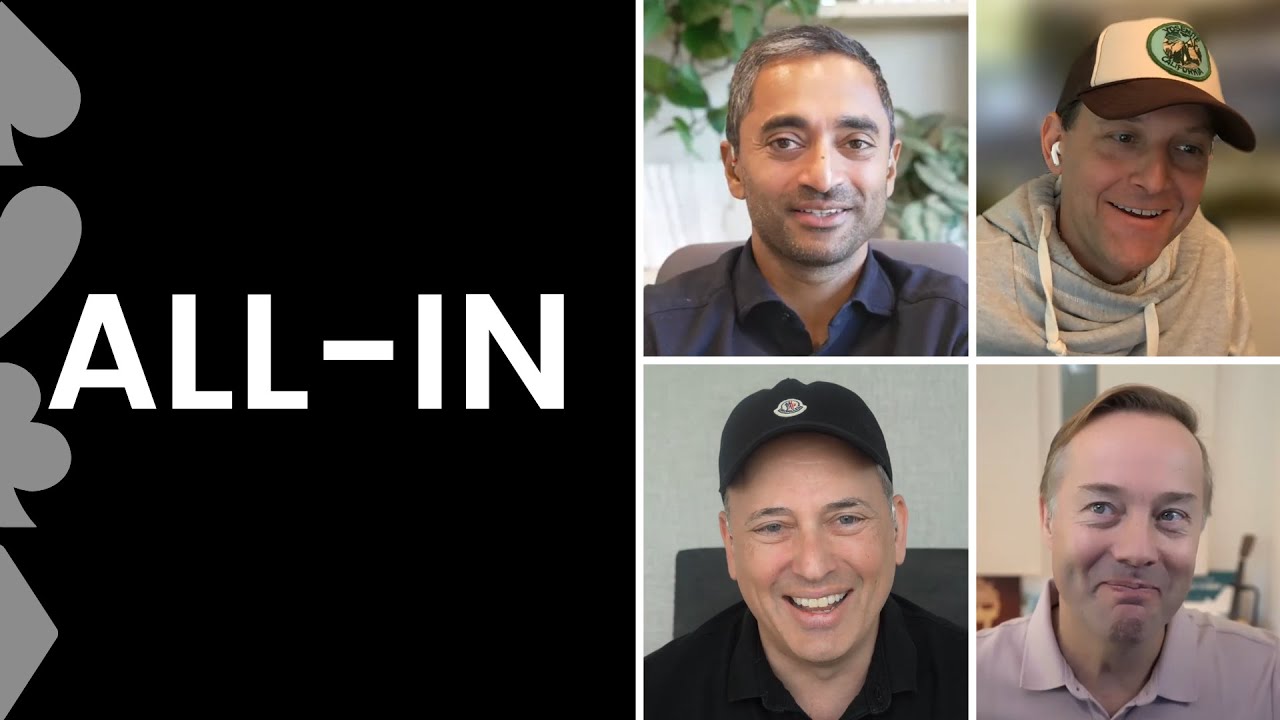
No guest this week. The besties move from Big Tech austerity to the global debt squeeze and Ukraine's escalation ladder. The hottest exchange asks whether a nuclear tail risk should keep investors out of a cheap market. Friedberg has the best episode because he makes every scary scenario show its economic transmission mechanism.
Spice rack
Was the Ukraine escalation risk too large to buy the market bottom?
Original point: With diplomatic off-ramps disappearing and nuclear escalation carrying catastrophic downside, investors should wait rather than buy the apparent bottom.
What everyone argued
Chamath Palihapitiya
Markets had already ring-fenced many currency, energy, and commodity effects of the war. Even a terrible incident might have less marginal financial impact than feared because second- and third-order economic channels had been adapting.
David Sacks
Annexation, Ukraine's NATO application, mobilization, and pipeline sabotage were closing peace terms. A low-probability nuclear or wider-war outcome had such severe negative value that investors should not assume it was priced in.
David Friedberg
He agreed the aggregate portfolio of low-probability, high-impact risks weighed on markets, but challenged Sacks to translate escalation into concrete economic effects after energy and currency adjustments.
Winner circle
Friedberg wins for making both sides meet the investment question. Sacks identified the most serious risk and Chamath correctly demanded a transmission mechanism, but Friedberg combined those strengths without pretending uncertainty had vanished. Hindsight favors the constructive side, yet the ruling rests more on disciplined decision analysis than on the lucky absence of catastrophe.
Commentary
Chamath Palihapitiya
Assumptions and fact checks
Energy, currency, and commodity adaptation had contained most market-relevant spillovers by autumn 2022.
Why it mattersThe adjustment was incomplete and costly, but markets and governments had months to reroute supply and absorb the initial shock. Continued war did not prevent later equity gains.
David Sacks
Sacks was right about the war and wrong to treat that as sufficient market timing. Risk identification is not position sizing.
Assumptions and fact checks
Diplomatic off-ramps had been systematically removed, leaving escalation as the dominant path.
Why it mattersEscalation clearly continued, but diplomacy, battlefield changes, sanctions, and security guarantees remained dynamic. 'All off-ramps' was too absolute.
A catastrophic tail risk made entering equities unjustified regardless of valuation.
Why it mattersA portfolio decision depends on probability, diversification, horizon, and price. Naming a severe scenario without those inputs cannot settle the allocation question.
Ukraine sought accelerated NATO membership in September 2022 and was not a NATO member.
CheckNATO records that Ukraine reiterated its membership request in September 2022. Ukraine remains a partner rather than a member, with an invitation dependent on allied agreement and conditions.
David Friedberg
Friedberg did the best analytical work: he neither dismissed the tail risk nor let it bypass the causal bridge from war to valuation.
Assumptions and fact checks
Markets primarily respond to expected economic effects rather than humanitarian severity by itself.
Why it mattersAsset prices discount expected cash flows, policy, rates, and risk premia. Moral importance and market impact can diverge sharply.
Would higher rates force a global debt squeeze, or would central banks simply rescue the system again?
Original point: Roughly $300 trillion of global debt exposed the economy to a massive squeeze as rates rose.
What everyone argued
Chamath Palihapitiya
The arithmetic did not mechanically dictate collapse because sovereign issuers could extend maturities, print, and backstop markets. The UK gilt rescue was his live example: authorities would choose financial stability and revive the central-bank put when something broke.
David Sacks
Governments had squandered the chance to lock in near-zero borrowing costs with very long bonds, and the UK turmoil showed that inflationary fiscal support could collide with bond-market discipline.
David Friedberg
He estimated that $300 trillion of debt at a five-percent rate implied $15 trillion of annual service, about 18 percent of world GDP, producing a severe squeeze across governments, firms, and households.
Winner circle
Chamath had the better forecast of institutional behavior and the better near-term macro outcome: authorities backstopped instability and the US did not hard-land in 2023. Sacks correctly explained why printing is constrained, while Friedberg correctly identified the vulnerable balance sheets. Chamath wins narrowly because the central question was whether the squeeze was unavoidable, not whether higher rates were painless.
Commentary
Chamath Palihapitiya
Chamath won the behavioral point: policymakers do not passively accept cascading defaults. His rhetoric overshot because rescues change who bears the loss; they do not repeal debt service.
Assumptions and fact checks
Central banks would restore a broad market put once tightening caused enough damage.
Why it mattersThe UK intervention supports the backstop mechanism, but it was aimed at market plumbing while monetary tightening continued. That is not the same as guaranteeing asset prices.
The Bank of England became an unlimited buyer of gilts and returned markets to their prior state.
CheckThe Bank made temporary, targeted long-dated gilt purchases to stop an LDI-driven fire sale. The intervention restored order, but it was bounded and did not make the mini-budget episode economically disappear.
David Sacks
Sacks supplied the missing constraint in Chamath's bailout story: somebody must hold the debt, and inflation can make monetary financing self-defeating.
Assumptions and fact checks
Issuing much more ultra-long debt near zero rates would have materially insulated the US from the later rate shock.
Why it mattersLonger duration would have slowed rollover exposure, although issuing enough at attractive yields and converting the existing stock were real constraints.
David Friedberg
Friedberg found the right vulnerability and used the wrong denominator mechanics. His warning works as a stress test, not literal debt-service accounting.
Assumptions and fact checks
A five-percent policy rate would quickly translate into a five-percent average cost across the entire global debt stock.
Why it mattersDebt reprices over time and across radically different contracts. The shortcut materially overstated the immediate cash-flow shock.
Global debt was about $300 trillion in 2022.
CheckWorld Bank material citing Institute of International Finance data put global debt near $300 trillion in June 2022.
Forty percent of UK mortgage dollars were interest-only adjustable-rate loans about to reset.
CheckONS reported that 86 percent of outstanding UK mortgages were fixed-rate in 2022. Many fixed deals did face painful refinancing, but the quoted 40-percent interest-only ARM characterization is unsupported and inconsistent with the official portfolio split.
Did politics drive the Fed's inflation error, or was the central bank trapped by lagging data and an unprecedented shock?
Original point: The Fed ignored incoming inflation data and kept the 'transitory' line for political reasons.
What everyone argued
Chamath Palihapitiya
Fed officials were competent but constrained by slow, revised data such as housing measures, leaving them to steer through the rear-view mirror rather than deliberately serving a political script.
David Sacks
The administration wanted inflation minimized, Powell echoed the transitory line while seeking renomination, and the timing made the policy error '100 percent political.'
Winner circle
Chamath wins the narrow causal question. Sacks persuasively prosecuted a policy error but did not prove that politics, rather than a bad economic framework and lagging recognition, caused it. The official record supports criticism of the Fed's judgment, not the certainty of Sacks's accusation.
Commentary
Chamath Palihapitiya
Chamath separated a forecast failure from corruption, a vital burden-of-proof correction. He could have pressed harder on why the Fed's own explanations still warranted criticism.
Assumptions and fact checks
Better real-time private data would have materially improved the Fed's decisions.
Why it mattersFaster data could help, but policy still requires causal judgment, forecasts, distributional choices, and a mandate tradeoff; an algorithm does not remove those decisions.
David Sacks
Sacks had a strong case for institutional failure and weakened it by insisting on an unproven political motive. The incorrect May chronology is especially damaging because timing carried the accusation.
Assumptions and fact checks
Powell adopted the transitory view to secure Biden's renomination.
Why it mattersThe timing alone does not establish motive, and the episode misstated the nomination date. Public Fed records give economic reasons—right or wrong—for the stance.
Powell was renominated at the end of May 2021 while the first major inflation surprise arrived.
CheckPresident Biden announced Powell's renomination on November 22, 2021, not at the end of May. The Fed was still using transitory language in its November 3 statement, but the timeline stated in the episode is wrong.
Chamath kept returning to the investable question: what changes future cash flows? That discipline beat a vivid tail-risk story, though his nuclear hypothetical deserved more humility.