Featuring
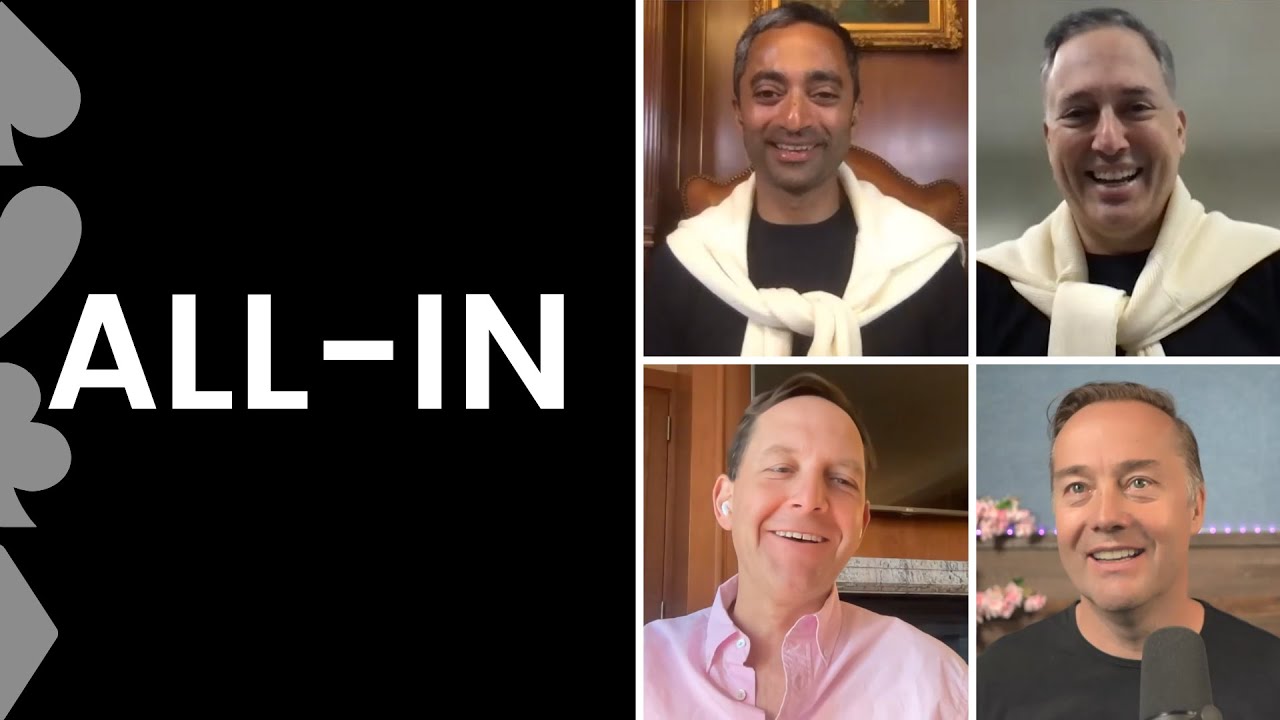
No guest this week. The besties move from the 2022 inflation squeeze to Dutch nitrogen cuts and Europe's energy scramble, but the sharpest exchange starts when Sacks says consumer behavior is already pivoting into recession and Chamath pushes him back toward the spending data. Chamath and Jason make the best timing call; Friedberg earns the explainer ribbon for turning ammonia runoff and fertilizer policy into plain English.
Spice rack
Was consumer behavior already pivoting into recession, or was weak sentiment still running ahead of actual spending?
Original point: Consumers said harder times were coming, but travel demand and prices showed that they were not yet tapping the brakes.
What everyone argued
Chamath Palihapitiya
Chamath argued that gloomy survey answers had not become a broad spending pullback. Pent-up travel, stimulus-era savings, and strong real-time demand at large retailers meant the economy was still in the first phase of adjustment; demand destruction might come later, after savings, credit, and labor-market cushions weakened.
Jason Calacanis
Jason sided with the observed-data camp: the consumer was holding up, survey pessimism was not behavior, and unusually plentiful jobs made the gasoline and inflation shock more manageable. He also acknowledged early weakness in housing and said the pressure would eventually catch up.
David Sacks
Sacks said the economy was 'pivoting on a dime.' He treated record-low consumer sentiment, recession polling, falling openings, asset losses, and incipient layoffs as early evidence that behavior was already turning and would soon catch up with pessimism.
David Friedberg
Friedberg split the difference. He said spending had inertia and people were not yet slowing their lifestyles, but rising consumer credit and unequal exposure meant many households were approaching a budget squeeze that could force spending down.
Winner circle
Chamath and Jason win the timing call. They separated terrible sentiment from actual behavior, and hindsight shows consumers and employers kept spending and hiring through the rest of 2022. Sacks correctly spotted genuine household and housing stress, while Friedberg sharpened the distributional risk, but both moved too quickly from pressure to a broad current downturn. The economy bent; it did not make the on-a-dime turn claimed in this exchange.
Commentary
Chamath Palihapitiya
Assumptions and fact checks
Weak consumer sentiment would not translate quickly or uniformly into weaker spending.
Why it mattersThat is what happened in the near term. Sentiment hit a record low in June, while real consumption still grew in the next two reported quarters.
Once excess savings were depleted, demand destruction and a demand-side recession would follow.
Why it mattersSavings fell and rate-sensitive sectors weakened, but the NBER has not dated a post-2020 recession through July 2026. The pressure mechanism was plausible; the recession conclusion was not inevitable.
There had not yet been an economy-wide downtick in consumer demand.
CheckThe claim is broad, but the best aggregate hindsight measure supports it: real personal consumption expenditures increased in both Q2 and Q3 2022, even as goods spending softened and services spending grew.
Jason Calacanis
Jason's cleanest line was that feelings are not behavior. The gasoline-cost anecdote and loose use of monthly versus annual housing-sales figures added noise, but neither changed the central labor-market case.
Assumptions and fact checks
An exceptionally strong jobs market would cushion households against inflation enough to keep the shock manageable in the near term.
Why it mattersThe cushion held: payroll employment kept rising and unemployment was 3.5% by December 2022, even while real household purchasing power was under pressure.
US job openings were 11.3 million in May 2022 and quits remained above 4 million.
CheckBLS reported 11.3 million openings and 4.3 million quits for May 2022.
The May decline in openings included 325,000 in professional and business services and 208,000 across durable and nondurable manufacturing.
CheckBLS reported a 325,000 decline in professional and business services, plus declines of 138,000 in durable-goods manufacturing and 70,000 in nondurable-goods manufacturing, totaling 208,000.
David Sacks
Sacks had the strongest risk case but converted a leading indicator into a current-state verdict. The record-low sentiment number deserved attention; it did not, by itself, establish that spending or employment had already rolled over.
Assumptions and fact checks
Record-low sentiment would quickly catch up with consumer behavior and reveal that the economy was already turning down.
Why it mattersThe divergence persisted. Real consumption grew in Q2 and Q3, and the expansion in employment continued through year-end despite deeply pessimistic surveys.
The combination of supply constraints and Fed tightening made a soft landing unlikely.
Why it mattersIt was a reasonable risk assessment in July 2022, but hindsight is unfavorable: inflation cooled without a newly dated NBER recession, and employment remained resilient.
The June 2022 consumer-sentiment result was the biggest one-month drop in 40 years.
CheckJune's index level of 50 was an all-time low, but that is different from the largest monthly drop. The May-to-June decline was 8.4 points; the index fell 17.3 points from March to April 2020 alone.
Broad US job losses were already starting in July 2022.
CheckLayoffs were occurring in particular firms and sectors, but the national labor market did not enter job loss: nonfarm payrolls kept increasing and added 223,000 jobs in December, while unemployment edged down to 3.5%.
David Friedberg
Friedberg supplied the best missing context by asking who was sustaining the aggregate numbers. His own evidence supported 'many households are vulnerable,' not 'the majority is already pivoting,' and the per-capita-income-to-hourly-wage conversion mixed incompatible denominators.
Assumptions and fact checks
A majority of Americans were already spending more than their income and therefore turning down even while affluent consumers propped up aggregates.
Why it mattersThe distributional concern is credible, but no evidence offered in the episode established the 'majority' threshold. Aggregate real consumption growth and positive personal saving are inconsistent with treating it as demonstrated.
Consumer credit balances were continuing to increase month after month in the second quarter of 2022.
CheckThe Federal Reserve reported positive annualized growth in total consumer credit in April, May, and June 2022; second-quarter growth was 8.7%, with revolving credit up 14.6%.
US per-capita income was about $38,000.
CheckThe Census Bureau's 2021 ACS estimate was $38,332 in per-capita money income. That figure covers the whole population, however, so dividing it by full-time work hours does not produce an average worker's hourly wage.
Chamath won the key timing point because he kept asking what consumers were doing, not merely what they told pollsters. He would have been stronger if he had dropped the bespoke recession vocabulary and treated later demand destruction as a scenario rather than a scheduled second act.