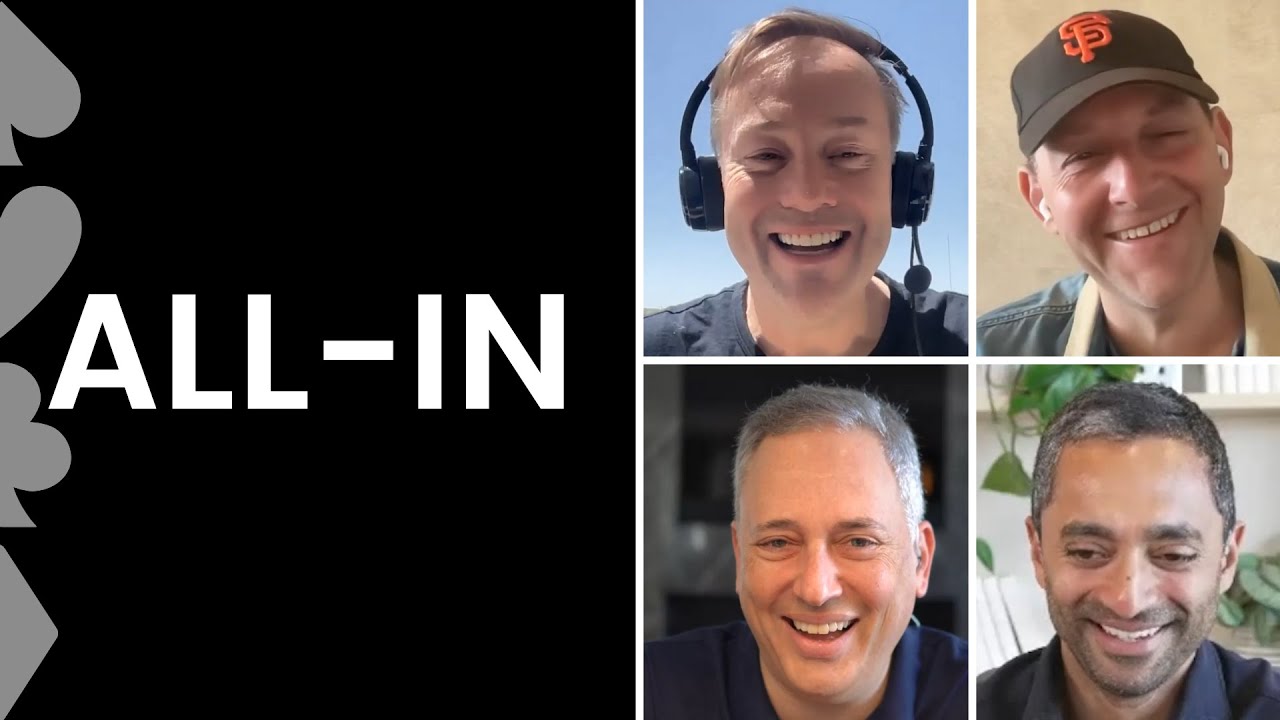
Featuring
Episode 75 is mostly an argument about institutional discipline: first the besties savage Fast and the venture boards that let burn outrun reality, then they spend the back half fighting over whether Elon can drag Twitter back toward a stronger speech norm without breaking everything else. The spiciest exchange is the deplatforming segment because Chamath openly updates, Friedberg plays the private-platform realist, and Sacks pushes the hardest on moderation creep. Sacks has the strongest overall episode: he is the clearest on startup governance, the most consistent on free speech, and the sharpest about the strategic cost of turning Ukraine into a forever side theater.
Spice rack
Was the post-2020 deplatforming trend already sliding from narrow edge cases into broader ideological censorship, making Elon's Twitter intervention directionally necessary, or were private platforms still basically justified in curating speech however they saw fit?
Original point: Sacks argues that Musk's Twitter stake matters less as a product story than as a free-speech story. He says the moderation regime had already moved from extreme edge cases into a much broader attempt to control entire categories of thought.
What everyone argued
Chamath Palihapitiya
Chamath starts from the pro-Musk side and then makes the most notable move in the segment: he openly says his views have changed. He had supported Trump's ban at the time, but by 2022 he thinks the broader deplatforming trend shows speech norms are more fragile than he assumed and that algorithmic or crowd-based ranking is better than categorical cancellation.
Jason Calacanis
Jason largely sides with the anti-censorship camp, but he adds an organizational explanation: management teams keep rewarding activist employee pressure by apologizing, wobbling, and showing that coordinated outrage can win. Later, he argues that if people want more censorship, they should organize capital, buy influence, and fight that battle directly at the ownership level.
David Sacks
Sacks says moderation creep was already obvious by 2022. He frames the logic as a ratchet: first fringe cases like Alex Jones, then a sitting president, then entire subject areas such as COVID and climate discourse. His position is that Musk's arrival mattered because almost no other influential owner would be willing to push back that hard against the censorship reflex.
David Friedberg
Friedberg is the holdout. He argues that platforms are under pressure from regulators, employees, and shareholders, and that as private businesses they will inevitably editorialize. He thinks concentrated ownership can change some tradeoffs, but he is skeptical that the speech problem has a clean governance fix.
Winner circle
Sacks wins, with Chamath close behind. Sacks is the clearest on the core problem: by 2022 the moderation frontier had moved well beyond a few isolated incitement cases, and that institutional ratchet deserved real pushback. Chamath adds value by publicly updating and by moving the conversation from personal preference to system design. Friedberg is right that platforms will always curate, but he never really rebuts the claim that the curation line had drifted too far. The later X/Twitter mess means the anti-censorship camp was too rosy about execution, not that its diagnosis was wrong.
Commentary
Chamath Palihapitiya
Assumptions and fact checks
The better default is to let more speech happen and rely more on ranking, labels, and counter-speech than on outright removal.
Why it mattersThat is often preferable in principle, but the success of that approach depends heavily on product execution and resistance to spam, brigading, and manipulation.
The moderation line from fringe cases to broader topic policing had already become visible by early 2022.
Why it mattersThat diagnosis is well supported by the examples discussed in the episode and the broader public debate at the time.
Jason Calacanis
Jason is best when he talks about managerial incentives and worst when he treats capital-market remedies as if they are broadly accessible civic substitutes.
Assumptions and fact checks
Repeatedly conceding to activist pressure encourages more aggressive future moderation demands.
Why it mattersThat is a credible institutional dynamic. Once employees or aligned publics learn that disruption produces policy wins, the tactic predictably repeats.
Ownership contests are a sufficiently realistic check on overreaching moderation by large platforms.
Why it mattersThe mechanism exists, but it is expensive, rare, and far from a general solution for ordinary users.
David Sacks
Sacks sees the censorship-creep pattern earlier and more coherently than anyone else on the panel. His blind spot is that he treats the implementation side as easier than it turned out to be.
Assumptions and fact checks
Once platforms normalize broad category bans, the burden of proof against future bans drops quickly.
Why it mattersThat institutional slippery-slope concern is persuasive. The exact endpoints remain contestable, but the ratchet dynamic is real.
A stronger free-speech default with narrower moderation would create a healthier long-run civic equilibrium.
Why it mattersThat is plausible, but later X/Twitter experience also showed significant costs around trust, spam, and social coherence when moderation norms loosen abruptly.
Musk disclosed a 9.2% stake in Twitter and was invited onto the board in early April 2022.
CheckContemporaneous reporting described Musk as disclosing a 9.2% stake, and Parag Agrawal publicly announced that Musk would join Twitter's board before Musk later declined the seat.
Pinterest announced a policy against climate misinformation in April 2022.
CheckPinterest publicly announced an expanded policy to combat climate misinformation in April 2022, matching the example Sacks uses to argue that moderation was extending into whole categories of discourse.
David Friedberg
Friedberg gives the best explanation for why moderation pressure exists, but he is less persuasive on whether the resulting policy perimeter was still justified.
Assumptions and fact checks
Editorial discretion by private platforms is an unavoidable feature of the product category rather than a correctable drift.
Why it mattersSome discretion is unavoidable, but that does not settle where the line should sit or whether it had drifted too far.
After Russia failed to take Kyiv, should the United States treat a long war of attrition in eastern Ukraine as an acceptable way to weaken Putin, or should it seek settlement sooner and refocus strategically on China?
Original point: Sacks argues that once Russia failed to topple Zelenskyy's government and the war shifted east, the U.S. should have been seeking settlement rather than embracing a long campaign whose strategic effect would be to pin American attention in Europe when China remained the larger rival.
What everyone argued
Jason Calacanis
Jason tests the opposite intuition. He asks whether a drawn-out Donbas fight might effectively cripple Putin, reduce Russia as a world power, and therefore count as a successful strategic checkmate for the United States even if it is costly.
David Sacks
Sacks says the U.S. is at risk of optimizing around the wrong rival. In his view, China is the real peer competitor, while Russia is dangerous but much smaller. He argues that a forever conflict in Donbas could sap U.S. resources, raise recession and inflation risks, and crowd out the pivot to Asia even if it does make Putin bleed.
Winner circle
Sacks wins, but with a narrower margin than he presents on air. He is more right about the war's likely duration, the cost of European distraction, and the danger of treating attrition itself as strategy. Jason is right that Russia paying a heavy price was not trivial, but he never shows why that upside overwhelms the broader opportunity costs. The main caveat is that Sacks is too confident that a Minsk-flavored negotiated off-ramp was really waiting to be taken after the invasion had already transformed the political landscape.
Commentary
Jason Calacanis
Jason asks the sharpest pro-attrition question in the segment, but he never quite establishes why bleeding Russia should dominate every competing strategic consideration.
Assumptions and fact checks
A prolonged war that degrades Russian power would still count as a strategic win for Washington even if it imposes high collateral costs.
Why it mattersThat depends on what alternative was actually feasible and on how heavily one weights European security, energy shocks, and long-run Asia priorities.
David Sacks
Sacks is substantially right about duration and strategic distraction, but he is too casual about the gap between a document existing and a workable settlement being politically available.
Assumptions and fact checks
China, not Russia, should have remained the dominant organizing priority for U.S. grand strategy.
Why it mattersThat is a defensible strategic hierarchy. The harder question is not the hierarchy itself but what policy toward Ukraine best served it.
A negotiated settlement after Russia's failed decapitation attempt was still realistically achievable enough to deserve more emphasis than attritional pressure.
Why it mattersThe claim is plausible in theory but much shakier in hindsight, given Russia's subsequent conduct and the political difficulty of any settlement that would have looked stable or just.
There was already a Minsk accords framework on the table dealing with the Donbas conflict.
CheckThe Minsk II package existed well before the April 2022 conversation and laid out an OSCE-backed framework for ceasefire and political steps tied to the Donbas conflict.
When a war shocks grain and fertilizer markets, can the world mostly substitute other calories and reroute supply, or are food systems too specialized and import-dependent for that to work cleanly?
Original point: Jason pushes back on the food-panic framing by asking whether the world can simply redirect people toward substitute calories such as rice, fish, or soybeans rather than treating wheat and corn disruptions as structurally catastrophic.
What everyone argued
Chamath Palihapitiya
Chamath offers the main challenge by questioning whether countries such as Sri Lanka are really as exposed if they grow substantial local food. His pushback is narrower than Jason's but points at an important distinction between gross domestic production and processed import dependence.
Jason Calacanis
Jason advances the intuitive resilience case. His core question is whether a globalized system that can move people and goods everywhere should really be as brittle as Friedberg suggests, or whether substitute calories and emergency trade can absorb more of the shock than the doomsday framing implies.
David Friedberg
Friedberg argues that the system is much less flexible than it looks from a distance. Mills, processors, and local food chains are built for particular inputs, not generic calories. Add in fertilizer shocks, acreage changes, and stockpiling by richer buyers, and the result is a real distribution crisis rather than a simple swap from one crop to another.
Winner circle
Friedberg wins clearly. He answers the actual question rather than the abstract one by showing why processing, crop-specific infrastructure, and import budgets matter more than generic calorie fungibility. Jason's resilience instinct is not wrong, but it is incomplete, and Chamath's local-production caveat sharpens the analysis without changing the bottom line.
Commentary
Chamath Palihapitiya
Chamath's question sharpens the discussion, but it does not overturn Friedberg's point that local production alone does not make a vulnerable importer resilient.
Assumptions and fact checks
Domestic agricultural production can materially cushion a country from imported processed-food shocks.
Why it mattersThat can help at the margin, but it does not erase import exposure or processing constraints.
Jason Calacanis
Jason asks the right question but not the strongest version of it. The live issue is not whether calories are abstractly substitutable; it is whether poor importers can afford and process the substitutes in time.
Assumptions and fact checks
In a global pinch, calorie substitution and logistical improvisation can offset a meaningful share of grain-specific shocks.
Why it mattersThat is directionally true, but the substitution is slower, uglier, and less complete than Jason's framing implies.
David Friedberg
Friedberg does exactly what the best version of this show needs: he turns a vague macro fear into a tractable chain of bottlenecks, incentives, and timing problems.
Assumptions and fact checks
The practical limits of milling, processing, and import finance make calorie substitution far less elastic than casual observers assume.
Why it mattersThat is the heart of why his argument holds up. Food systems are physical, path-dependent, and often constrained by equipment and purchasing power.
Richer countries and stockpiling buyers can worsen shortages for poorer importers even when aggregate global calories have not vanished.
Why it mattersThat is a standard crisis dynamic in commodity markets and fits the pattern of 2022 stress.
The USDA's spring 2022 planting outlook cut intended U.S. corn acreage from about 93 million acres to about 89.5 million acres.
CheckUSDA's March 31, 2022 Prospective Plantings report estimated 2022 corn planted area at roughly 89.5 million acres, down from the prior year's roughly 93.3 million planted acres and consistent with Friedberg's point that fewer acres were headed into corn.
Chamath is not the originator of the anti-censorship argument, but he gives the segment its most intellectually disciplined update.