Featuring
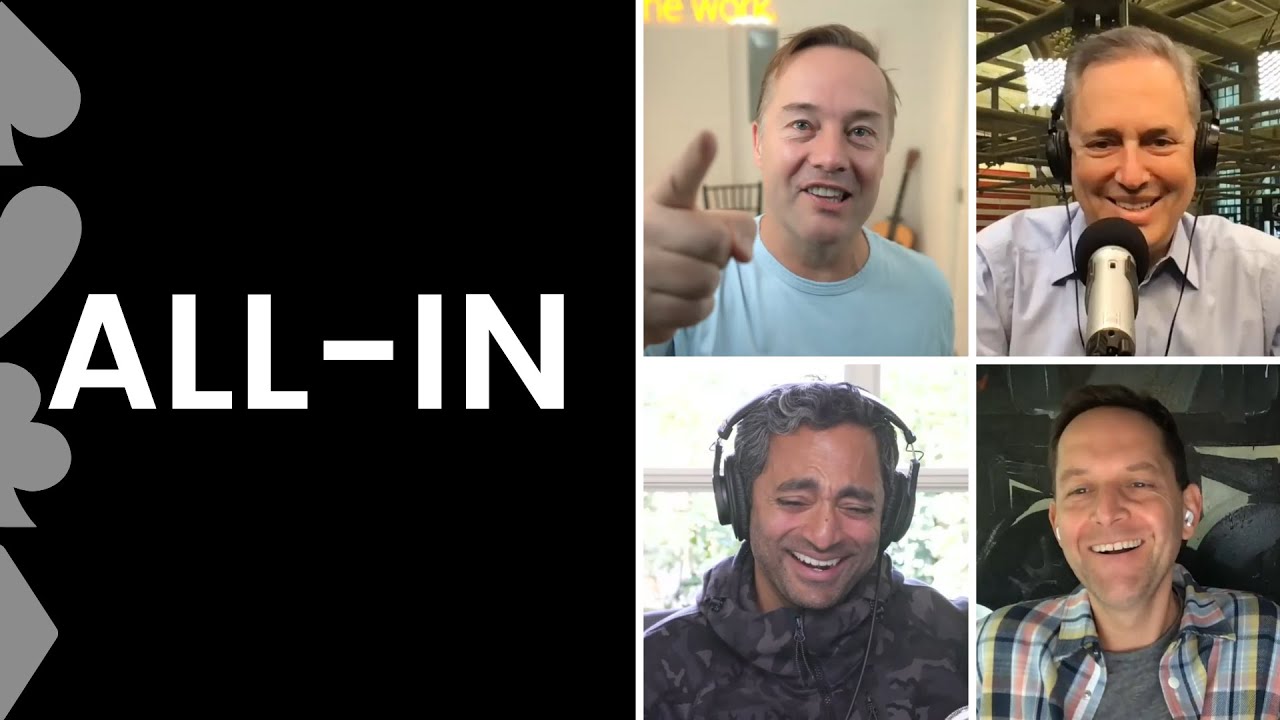
Episode 54 opens with the besties clowning a Microsoft accessibility clip, swings through Sequoia's new forever-fund logic and Zillow's home-flipping wreck, then ends in a much more serious argument about what voters were really saying in November 2021. The live wires are not the obvious headlines so much as the moments when somebody tries to stretch a narrow point into a worldview. That is where the episode gets good. Chamath has the best episode because he is crisp on the market stuff, crisp on Zillow, and especially sharp once the politics section turns into a fight over whether Americans wanted ideology or just a little peace and quiet.
Spice rack
Was Microsoft's self-description intro a legitimate accessibility practice, or mostly corporate performative politics?
Original point: Jason sets up the viral Microsoft clip and asks whether the self-descriptions and land acknowledgements were inclusion-minded context or just another burst of performative corporate politics.
What everyone argued
Chamath Palihapitiya
Chamath backs the critique by arguing that color and race descriptors are written for sighted politics, not blind comprehension. He treats the clip as another example of corporate institutions overshooting into ritual rather than solving a real problem cleanly.
Jason Calacanis
Jason argues that there was obvious virtue signaling in the clip, but still gives Microsoft some benefit of the doubt. His core defense is that visually impaired viewers can benefit from some physical description and that the rollout looked sloppier than the underlying intent.
David Sacks
Sacks argues that the accessibility explanation is a post-hoc excuse. His case is that blind viewers do not need race callouts or tribal acknowledgements to understand a developer presentation, so the clip reads as woke corporate pageantry rather than a serious accommodation.
David Friedberg
Friedberg pushes back on the instant outrage and says the broader context matters. His position is that the clip was pulled out of context and that descriptive intros for visually impaired people are not obviously ridiculous just because the internet reacted badly.
Winner circle
Sacks wins. Jason and Friedberg are right that accessibility should not be dismissed just because internet mobs found the clip cringeworthy, and some form of visual self-description can be reasonable. But Sacks and Chamath better identify the key flaw: the actual practice drifted beyond useful accommodation and into ideological performance. The backlash was not just anti-woke reflex. It was also a reaction to a rationale that did not fit the most conspicuous parts of the ritual.
Commentary
Chamath Palihapitiya
Assumptions and fact checks
Descriptors like race and color in this setting are primarily political signals to sighted observers, not accessibility tools for blind participants.
Why it mattersThat is the most plausible explanation for the controversial parts of the clip. The panel is not disputing that some description can help; it is disputing which descriptions actually do the work.
Jason Calacanis
Jason's instinct to separate intention from execution is healthy, but he bends too far toward charitable interpretation. He never really answers the strongest objection: the clip's most mocked elements were not the parts most obviously tied to accessibility.
Assumptions and fact checks
A muddled, overdone accessibility practice should be judged primarily as a bad implementation of a reasonable idea rather than as evidence that the idea itself is unserious.
Why it mattersThat is a fair caution, but the actual content matters. Once the intros move into ethnicity and tribal acknowledgements without clear user need, the execution problem starts to look inseparable from the underlying ideological signaling.
David Sacks
Sacks wins because he attacks the actual overreach instead of a straw man. The edge is not that accessibility norms are fake; it is that Microsoft's specific version blurred accommodation and ideological self-display badly enough that the backlash was predictable.
Assumptions and fact checks
If an accessibility rationale cannot explain the most ideologically loaded parts of a practice, then the practice is better understood as symbolic politics than as user-centered design.
Why it mattersThat is the right reading here. Basic visual self-description is one thing; bundling it with race consciousness and land acknowledgements is what makes the performance look ideological rather than functional.
David Friedberg
Friedberg improves the debate by slowing down the mob instinct, but he does not fully carry the case. The broader context explains why the practice existed, not why its most controversial elements were well judged.
Assumptions and fact checks
The social-media backlash overstated the absurdity of the practice because the clip was detached from a broader setting where descriptive intros made more sense.
Why it mattersThat may be partly true, and Friedberg is right to resist viral-context overconfidence. But even with context, the extra identity-signaling layers remain hard to defend as necessary accessibility design.
Did the 2021 off-year elections show a demand for calm centrism, or did the panel overread one night's anti-chaos vote as a durable anti-left mandate?
Original point: Sacks frames the Virginia and New Jersey results as a 'wokelash' and argues that voters are rejecting progressive policy extremism on crime, education, and cultural politics.
What everyone argued
Chamath Palihapitiya
Chamath argues that both parties miss the point when they force people to choose between order and fairness. His case is that voters want moderation on economy, education, and safety, and that both Trump's behavior and progressive policy maximalism violate that demand for normal life.
Jason Calacanis
Jason keeps pressing the narrower interpretation. He asks how much of the swing was simply exhaustion with Trump-style chaos and argues that what voters really want are normal politicians who keep schools working, streets safe, and public behavior sane.
David Sacks
Sacks says the election results show a backlash against progressive excess, not just against Trump. He ties Virginia, New Jersey, Minneapolis, and Seattle together into one story about voters rejecting defund-the-police politics, school-board ideology, and left-coded cultural overreach.
Winner circle
Chamath wins, with Jason reinforcing the best limiting principle. Sacks was directionally right that 2021 exposed weaknesses in progressive messaging on education, crime, and culture. But he read too much inevitability into it. The electorate looked less like a new ideological majority and more like a tired public asking for normal behavior, centrist governance, and fewer grand crusades. That is the interpretation that aged best once the 2022 results arrived.
Commentary
Chamath Palihapitiya
Chamath wins because he reads the electorate as exhausted rather than converted. That sounds less spicy in the moment, but it ends up closer to what the next cycle actually showed.
Assumptions and fact checks
Most voters in this moment were looking for centrist competence on a few everyday priorities rather than grand ideological projects from either side.
Why it mattersThat is the strongest summary of the night's signal. It leaves room for issue-specific backlash without pretending the electorate had embraced a coherent doctrinal alternative.
Ann Davison, a Republican, defeated Nicole Thomas-Kennedy for Seattle city attorney in 2021.
CheckThat race did end with Ann Davison beating Nicole Thomas-Kennedy, a result that fed the panel's broader law-and-order argument about the night.
Jason Calacanis
Jason's argument is less dramatic, which makes it more durable. He does not deny the backlash; he just refuses to confuse a craving for normalcy with a settled ideological conversion.
Assumptions and fact checks
A meaningful portion of the 2021 swing reflected the fading of anti-Trump urgency rather than a positive embrace of a more ideological Republican program.
Why it mattersThat is a strong hindsight reading. The electorate looked more interested in relief from chaos than in a decisive embrace of movement conservatism.
David Sacks
Sacks diagnoses the immediate voter mood better than many Democrats did at the time, but he oversells the scale and permanence of the shift. The good read on 2021 turns into a bad forecast when he treats one night's frustration as a clean 2022 mandate.
Assumptions and fact checks
The 2021 off-year results were a durable ideological repudiation of progressive governance, not mainly a temporary demand for less chaos and more moderation.
Why it mattersThe backlash story captured something real on schools, crime, and tone, but Sacks pushes it too far. Voters clearly wanted normalcy; the claim that they had settled on a stable rightward ideological turn was much less supported by what happened next.
Glenn Youngkin beat Terry McAuliffe in Virginia after Joe Biden had carried the state by roughly ten points a year earlier.
CheckThat broad comparison is correct. Youngkin won the 2021 governor's race, and Virginia had voted for Biden by about ten points in the 2020 presidential election.
Minneapolis voters rejected the proposal to replace the police department with a public-safety department by roughly 56 percent to 44 percent.
CheckThat description matches the result. The Minneapolis public-safety amendment failed, with a clear majority voting no.
Republicans were likely to gain roughly 44 to 51 House seats in 2022.
CheckThat projection aged badly. Republicans did win the House in 2022, but only by a net gain of nine seats, nowhere near the range Sacks cited.
Should venture firms keep public winners inside evergreen structures, or distribute the decision back to LPs once companies go public?
Original point: Jason uses Bird's listing and Sequoia's new structure to ask whether top venture firms should keep owning public winners or hand those shares back to LPs.
What everyone argued
Chamath Palihapitiya
Chamath argues that evergreen capital solves a different problem from post-IPO distribution. He is skeptical that even great venture firms necessarily compound public equities better than their LPs, and he points to the difficulty of switching between venture and public-market skill sets.
Jason Calacanis
Jason argues that elite venture firms may have better second-decade insight than their LPs because they sit on the board and know the company far beyond IPO day. His instinct is that forced distribution can leave too much long-term value on the table.
David Sacks
Sacks takes the LP-choice side. His bias is to distribute shares once they are fairly valued and let LPs decide whether they want to keep holding, because the capital is ultimately theirs and the venture firm is not automatically the best public-market owner.
David Friedberg
Friedberg zooms out and frames the whole discussion as part of the long search for permanent capital. His point is that many investors want a structure that lets them keep compounding without fund-life constraints, and Sequoia is pursuing that ambition openly.
Winner circle
Chamath wins, with Sacks close behind. Jason is right that the traditional venture timetable can force silly exits from exceptional businesses, and Friedberg is right that permanent capital solves a real institutional frustration. But Chamath makes the sharper distinction: an evergreen vehicle is a structure, not proof of edge. Until a venture firm demonstrates that it can manage public equities better than LPs can manage them themselves, distribution should remain the presumptive baseline rather than the embarrassing fallback.
Commentary
Chamath Palihapitiya
Chamath wins because he separates two ideas the others blur together. Permanent capital may be efficient, but efficiency is not the same as justified control over LP exposure.
Assumptions and fact checks
Venture skill and public-equity skill are materially different enough that LPs should not assume excellence in one implies excellence in the other.
Why it mattersThat distinction remains persuasive. Manager access and founder judgment help, but they do not erase the different disciplines required in liquid public markets.
Jason Calacanis
Jason's framing is strong because it points at a real institutional mismatch between ten-year venture cycles and companies that compound for decades. But he leaps too quickly from 'we know the company well' to 'we should keep managing the public stock for you.'
Assumptions and fact checks
Board-level venture investors have enough continuing informational edge in public companies to justify keeping LP capital under their control after IPO.
Why it mattersSometimes they do, especially in founder-quality and product evolution. But public-market skill, position sizing, liquidity discipline, and relative-value judgment are different muscles, and Jason does not show that venture access alone closes that gap.
Sequoia announced a new fund structure that would keep owning public shares rather than forcing the traditional venture-fund sell-or-distribute cycle.
CheckThat was the substance of Sequoia's 2021 restructuring. The new Sequoia Fund was described as an open-ended vehicle meant to hold U.S. and European investments, including public equities.
David Sacks
Sacks does not romanticize the venture-manager mystique. His position is less glamorous than Jason's, but it is more disciplined about who bears risk and who should control liquid exposure.
Assumptions and fact checks
When a company becomes public and liquid, the default should be to return agency to LPs unless the manager can prove a continued edge.
Why it mattersThat is the sound default. Permanent capital can work, but it should be earned by demonstrated capability rather than presumed from pre-IPO access.
David Friedberg
Friedberg is useful here as the institutional explainer. He helps define the landscape, but he does not really beat Chamath's narrower challenge about whether Sequoia should be presumed better than its LPs at public-stock holding.
Assumptions and fact checks
The attraction of permanent capital is strong enough that leading venture firms will keep pushing toward structures that extend control past IPO.
Why it mattersThat has broadly held. The strategic logic for avoiding forced exits remains compelling even if the manager-edge question is still contestable.
Chamath does not build the full argument alone, but his distinction is useful. He helps pin down exactly where descriptive practice slides into social signaling.