Featuring
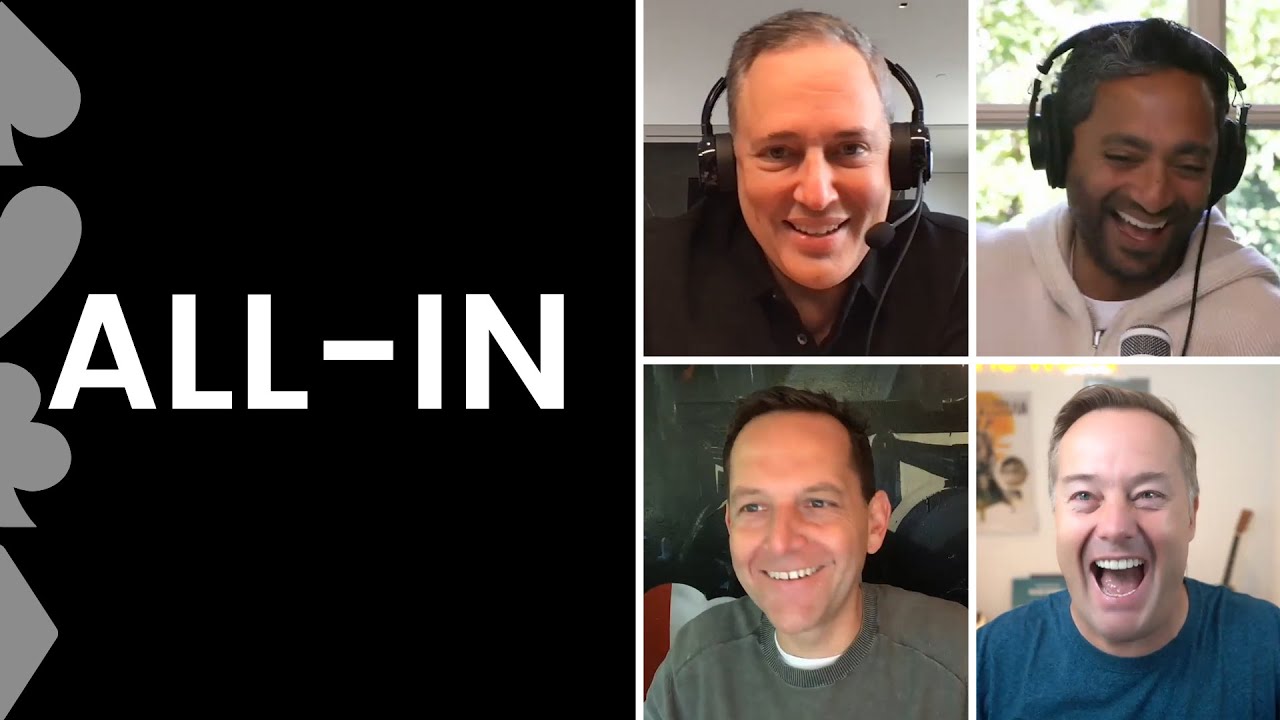
Episode 47 covers California politics, UBI, the Kabul drone-strike fallout, and a lot of Silicon Valley nonsense, but the real heat shows up when the hosts stop riffing and start drawing lines. The best fights are over whether Instagram's teen-harm evidence makes social media a true public-health problem and whether Theranos belongs in the same bucket as ordinary startup hype. Chamath has the best night: he is sharp on youth-platform risk and, with Sacks, strongest on the line between puffery and fraud.
Spice rack
Is Instagram a tobacco-scale public-health problem or mainly an amplifier of existing social pressures?
Original point: Chamath links the leaked Instagram research to the tobacco Master Settlement Agreement and argues that a scaled consumer product can create public-health liability when the company knows about the harm.
What everyone argued
Chamath Palihapitiya
Chamath argues the tobacco analogy is not crazy because the relevant comparison is not lungs versus screens but repeated chemical and behavioral pathways. His core claim is that if a platform knows its product is creating mental-health damage at scale, regulators and state attorneys general will eventually treat that as a liability problem.
Jason Calacanis
Jason argues that social apps are more pernicious than older media because they are interactive, constant, and optimized for repeated use. He frames the whistleblower leak as a classic 'company knew' moment and pushes the audience toward a public-health reading of the problem.
David Sacks
Sacks says the tobacco analogy is hyperbolic. In his telling, social media did not create body-image insecurity; it intensified older social pressures already produced by fashion, advertising, television, and celebrity culture. He is open to warnings and some child-focused guardrails, but he resists treating Facebook as uniquely culpable.
David Friedberg
Friedberg pushes the scale and optimization angle. He asks what threshold should trigger regulation and argues that consumer businesses often optimize around addictive or harmful tendencies, so the real question is how society decides when a scaled product has crossed the line.
Winner circle
The better answer is that Instagram was not just passively reflecting preexisting social pressure; its design and optimization likely intensified those pressures enough to create a real public-health concern for minors. Sacks is right that the tobacco analogy can be overstated and that older media already did damage, but he underestimates how much more potent an always-on, algorithmic, interactive feed can be. Jason and Friedberg identify the product-scale problem, but Chamath argues it most cleanly by connecting known harm, child exposure, and likely regulatory consequences without pretending the platform is harmless. The concern side wins, though the evidence burden still falls short of a perfect tobacco parallel.
Commentary
Chamath Palihapitiya
Assumptions and fact checks
A platform can create a genuine public-health problem even if the mechanism is behavioral rather than chemical ingestion.
Why it mattersThat is a reasonable framework for youth-mental-health risk, even though the harm profile is less settled and less uniform than tobacco's.
Known internal harm evidence plus algorithmic optimization materially increases legal and regulatory risk.
Why it mattersThat assumption is well grounded in how product-liability and state-enforcement narratives typically develop.
The tobacco Master Settlement Agreement was entered in November 1998 between 46 states and the four largest cigarette manufacturers.
CheckThat is the basic structure and timing of the 1998 MSA.
Instagram's leaked internal research showed body-image issues got worse for one in three teen girls.
CheckThat claim matches the reporting on the leaked Facebook slides, though it comes from internal research summaries rather than a published peer-reviewed study.
Jason Calacanis
Jason is most persuasive when he stays concrete about addictive product design and least persuasive when he smuggles in loose causality from population-wide distress trends. The product critique lands; the evidentiary stretch does not.
Assumptions and fact checks
Interactive algorithmic feeds are materially more harmful than older one-way image media.
Why it mattersThat is a strong and increasingly evidence-backed framing even if the size of the harm remains debated.
The leaked internal documents materially increase the case for platform liability.
Why it mattersInternal knowledge is often what turns a vague harm narrative into a more credible regulatory and legal story.
Facebook's internal slides said teens blamed Instagram for increased anxiety and depression and that body-image issues worsened for one in three teen girls.
CheckThat is consistent with the leaked-slide reporting, though the underlying materials were internal and selectively disclosed.
A broad rise in overall US suicide rates from the mid-2000s is evidence that social media caused the problem.
CheckThe episode cites an overall-population trend, but that does not by itself establish a social-media causal mechanism, much less one isolated to teen-girl Instagram use.
David Sacks
Sacks is useful as the anti-panic voice, and he correctly objects to lazy one-to-one tobacco rhetoric. But he loses ground by treating algorithmic social platforms as too similar to magazines and television, which misses the frequency, feedback loops, and optimization pressure driving the dispute.
Assumptions and fact checks
Social media mostly amplifies preexisting social harms rather than creating a materially new category of harm.
Why it mattersThe amplification point is right, but the intensity, scale, and optimization features of modern feeds likely make the product more than a simple mirror.
The public discussion around platform harms is inflated by legacy-media self-interest.
Why it mattersThat may be true at the margin, but it does not explain away the internal-research evidence or the broader youth-mental-health concern.
Body-image and self-esteem issues existed before social media.
CheckThose issues plainly predate Instagram and were long associated with fashion, advertising, and youth media culture.
Warning-label style responses are more analogous to existing product regulation than outright prohibition.
CheckThat is a fair descriptive claim about how many risky consumer products are handled, though it is more an analogy than an empirical Instagram fact.
David Friedberg
Friedberg does not win on rhetorical heat, but he adds the clearest governance frame. His version is the least sloppy because it focuses on threshold, scale, and optimization instead of culture-war symbolism.
Assumptions and fact checks
The key policy question is not whether harm exists but when scaled harm plus optimization justifies intervention.
Why it mattersThat is the right institutional lens for this debate.
Many consumer businesses optimize around human weaknesses, not just social-media companies.
Why it mattersThat broad pattern is plausible and helps keep the debate from collapsing into a Facebook-only morality play.
A 12-ounce Coca-Cola contains about 40 grams of sugar.
CheckThe standard Coca-Cola nutrition information is about 39 grams per 12-ounce serving, which makes Friedberg directionally correct.
Where is the line between ordinary startup hype and actual fraud?
Original point: Jason asks whether Ellen Pao has a point about a double standard after listing Juicero, Juul, Berkeley Lights, App Annie, Tether, and other male-led blowups or enforcement actions.
What everyone argued
Chamath Palihapitiya
Chamath agrees Theranos was different and adds two reasons: it operated in a heavily regulated market, and it brought in powerful nontechnical insiders who were less capable of technical diligence. He also says he tried multiple times to build a Theranos-like product and discovered firsthand how implausible the core promise was.
Jason Calacanis
Jason grants that Theranos was worse, but he keeps stressing that male founders and executives also get away with unethical conduct, softer press treatment, or delayed enforcement. He cites Juicero, App Annie, HeadSpin, Tether, and other examples to resist making Holmes look uniquely bad.
David Sacks
Sacks argues the legal line is not 'ambitious company that failed' but lying about present capabilities, falsifying documents, and misleading investors or patients about facts rather than hopes. In his framing, Theranos crossed that line and Juicero-style overfunded nonsense usually does not.
David Friedberg
Friedberg is interested in the culture that discourages founders and investors from publicly calling out misrepresentation because capital flows reward silence. He still agrees there is a meaningful distinction between fraud and ordinary visionary overreach.
Winner circle
The stronger answer is that Theranos was not just another example of startup puffery or a stupid overfunded product; it crossed into documentable fraud. Sacks wins the legal distinction by drawing the line at false present-day capabilities and falsified documents, while Chamath wins the contextual distinction by showing why a regulated medical-claims business deserves a much higher bar than a consumer gadget or overhyped SaaS company. Jason is right that Silicon Valley's misconduct is not male-exempt and that media fascination with Holmes was gendered and symbolic. But those truths do not collapse the difference between a venture flop and a fraud case that ended in conviction.
Commentary
Chamath Palihapitiya
Chamath does not sharpen the legal line as precisely as Sacks, but he adds the best contextual explanation for why Theranos was always a more dangerous and prosecutable case than a goofy hardware fad.
Assumptions and fact checks
Regulated-market claims deserve a higher evidence bar than ordinary consumer-product claims.
Why it mattersThat is both legally and morally correct.
Theranos benefited from investors whose prestige exceeded their technical diligence.
Why it mattersThat is a fair reading of the public Theranos story and board composition.
Theranos was operating in a more regulated domain than a company like Juicero.
CheckThat is plainly correct: Theranos made medical-testing claims in a highly regulated field, unlike a premium consumer juicer.
The only version of the small-blood-sample problem solved well involved sophisticated cell-free DNA testing businesses like Guardant and Grail.
CheckThose companies did build major liquid-biopsy businesses around cfDNA, though that does not by itself prove Chamath's broader market characterization in every detail.
Jason Calacanis
Jason usefully resists the lazy idea that only Holmes embodied Silicon Valley excess. But he hurts himself by trying to make too many unlike things look alike.
Assumptions and fact checks
Media obsession with Holmes reflected gendered storytelling as much as pure legal principle.
Why it mattersThat is plausible and likely true at least in part.
A broad pattern of male-led misconduct undermines using Holmes as a uniquely scandalous case.
Why it mattersThe existence of other misconduct does not erase the fact that Theranos crossed a more serious evidentiary and legal line.
App Annie paid a $10 million SEC penalty.
CheckThat figure matches the SEC settlement announcement.
Bitfinex and Tether were banned from New York and paid a settlement after the attorney general's investigation.
CheckThe New York attorney general announced an $18.5 million settlement and restrictions on New York trading activity.
Juicero was very similar to Theranos because it made a hardware claim that was not necessarily true.
CheckJuicero became a notorious overhyped product, but the public record does not support treating it as remotely equivalent to Theranos's combination of medical claims, deceptive demonstrations, and investor/patient fraud exposure.
David Sacks
Sacks wins because he keeps returning to the actual burden of proof instead of getting lost in vibe-based founder comparisons. It is the cleanest answer to the episode's fraud question.
Assumptions and fact checks
The startup ecosystem needs a bright line between aggressive vision and falsified present facts.
Why it mattersThat distinction is both legally and ethically central.
Ellen Pao's frame blurred materially different categories of misconduct.
Why it mattersThat is the strongest critique of her op-ed as discussed here.
What made Theranos different was lying about present-day capabilities and falsifying documents, not merely having a grand vision that failed.
CheckThe SEC's Theranos case and the later Holmes verdict both turned on materially false statements and deceptive evidence, not on ordinary startup optimism alone.
App Annie was fined by the SEC for deceptive conduct around its data practices.
CheckThe SEC announced a $10 million settlement over deceptive data-collection and disclosure practices.
David Friedberg
Friedberg's culture-of-silence point is worth keeping, but it is adjacent to the central question. It helps explain why gray-zone behavior lasts, not why Theranos should be judged the same as other startup failures.
Assumptions and fact checks
Venture networks often discourage public criticism of questionable companies because more capital in the category helps everyone nearby.
Why it mattersThat is a plausible and coherent account of why silence can persist around weak or misleading businesses.
HeadSpin was accused by regulators of deception rather than merely having a startup that failed to meet its hopes.
CheckThe SEC did pursue HeadSpin-related fraud allegations, which supports Friedberg and Jason's broader point that male-led misconduct also draws enforcement.
Should TikTok, Instagram, and similar feeds be kept off most kids' phones until around age 16?
Original point: After Sacks suggests warning-label style responses, Chamath says the stronger answer is to put these products behind a counter for minors and keep most kids off them until roughly age 16.
What everyone argued
Chamath Palihapitiya
Chamath argues for a blunt-force rule: keep TikTok, Snapchat, Facebook, Instagram, and Twitter off kids' devices until around 16, with narrow exceptions. His case is that some friction is the point; you do not need a perfect ban for a rule to prevent a lot of harm.
Jason Calacanis
Jason pushes the child-safety side and is open to surprisingly broad limits, even floating soda restrictions for minors once the conversation turns to consistency. He repeatedly frames the issue as one of products that can send kids very quickly into harmful recommendation loops.
David Sacks
Sacks starts from the warning-label position, then concedes there is a serious minors issue. His core hesitation is that bans can become whack-a-mole: teenagers may simply migrate to text groups, Signal, or other channels where parents and platforms see even less.
David Friedberg
Friedberg worries that the same logic could extend to other unhealthy consumer categories like soda and that parental curation still matters. He also gives the most candid admission of parental failure when describing how quickly even kids' products can go off the rails without oversight.
Winner circle
The better side is that minors needed much stronger restrictions than the platforms were offering in 2021, even if the exact age line and enforcement design remain debatable. Chamath wins because he understands that the goal of youth regulation is not perfection; it is harm reduction through friction, defaults, and delayed exposure. Sacks is right that bans leak and that implementation matters, but that is an argument for smarter design, not for shrugging at child exposure. Jason and Friedberg add useful consistency tests, yet neither produces a cleaner governing principle than Chamath's basic child-protection frame.
Commentary
Chamath Palihapitiya
Chamath is the most decisive and least evasive participant here. Even if his exact age threshold is contestable, he is right that 'kids will find a way anyway' is too weak to defeat a restriction regime.
Assumptions and fact checks
Imperfect friction is still valuable when the target population is minors.
Why it mattersThat is a standard and sensible way to think about youth safeguards.
Around age 16 is a more defensible threshold than full adult access for younger teenagers.
Why it mattersThe age line is debatable, but the broader child-protection logic is stronger than the precise cutoff.
Companies have long relied on COPPA-style age restrictions around under-13 use, but those protections are widely evaded in practice.
CheckCOPPA does regulate data collection from children under 13, and the hosts are directionally right that age-gating alone has often been weak in practice.
Jason Calacanis
Jason is more rhetorically scattershot than Chamath, but he is on the right side of the core child-protection question. His case would be stronger if he cut the side quests and stayed on recommendation design.
Assumptions and fact checks
Fast-moving recommendation loops create a child-safety problem that justifies stronger intervention than generic speech products.
Why it mattersThat is a persuasive framing and one that has only become more mainstream since 2021.
Recommendation systems can rapidly steer users into narrow content loops after limited interaction signals.
CheckThat is a fair high-level description of how engagement-driven recommendation systems work, though the exact percentages he implies in discussion are not independently verified here.
David Sacks
Sacks earns credit for narrowing his position once the conversation becomes specifically about minors. His leakiness objection is strong, but it does not refute the case for meaningful friction.
Assumptions and fact checks
Broad prohibitions can backfire by pushing kids into darker or less visible channels.
Why it mattersThat is a real implementation risk and the best objection to Chamath's blunt-force approach.
Guardrails may outperform a flat ban for many teenagers.
Why it mattersThat may be right for some age bands, but it depends heavily on enforcement, defaults, and parental supervision.
Under-13 use is already prohibited by major platforms' terms and regulated by COPPA-style child-privacy rules.
CheckThat is directionally correct as a description of the legal and platform baseline for younger children.
David Friedberg
Friedberg usefully resists single-product moral panic, but his soda analogy can become a dodge if it implies that because many child-health risks exist, none should face stronger digital restrictions.
Assumptions and fact checks
Parental curation is a necessary part of any workable youth-safety system.
Why it mattersThat is clearly true, but it is not sufficient on its own.
Sugary drinks are a major childhood health concern and can be framed as more physically harmful than social media in some respects.
CheckThat broad comparison is directionally plausible, though the products create different categories of harm and are not easily reduced to one metric.
Chamath gets the structure of the problem right: scale, internal knowledge, and child harm are what make this more than a generic media gripe. He is weakest when he tries to make the cigarette analogy physiologically too literal instead of keeping it at the product-governance level.