Featuring
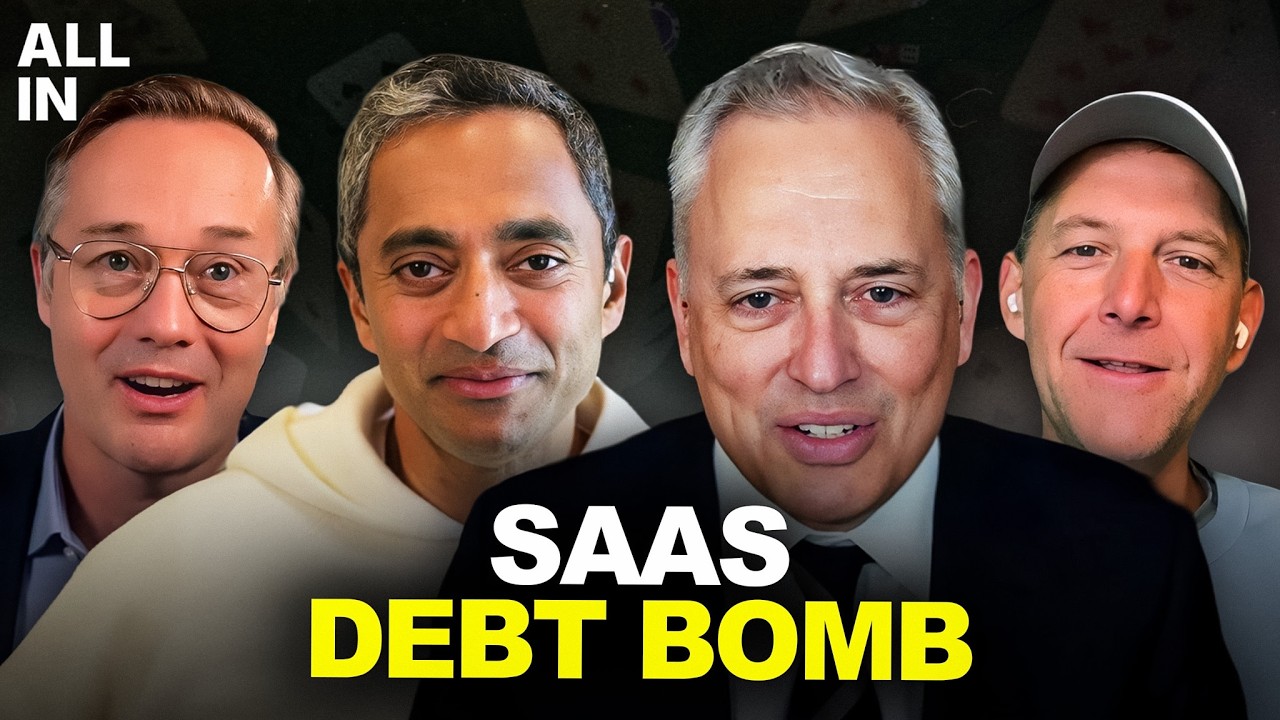
Episode 270 turns into an audit-everything special: AI reprices software, Apple starts its post-Cook handoff, the SPLC indictment detonates a nonprofit-incentives fight, and Friedberg closes with a science-corner warning on picloram and young-onset colon cancer. The spiciest exchange is the SPLC segment, where Jason keeps waving the due-process flag while Sacks and Chamath use the indictment to go after the NGO model itself. Chamath is strongest on why SaaS pricing math breaks under agents, Sacks is sharpest on institutional incentives, and Friedberg gives the clearest picture of what Apple should actually build next.
Spice rack
Does the SPLC indictment mainly show criminal donor deception or a broader NGO incentive problem?
Original point: Jason tees up the federal indictment against the Southern Poverty Law Center, frames the alleged hidden-bank-account and paid-informant scheme, and asks whether the story points to a larger nonprofit grift model.
What everyone argued
Chamath Palihapitiya
Chamath treats the indictment as evidence that NGOs have become power-seeking institutions with weak accountability. He argues that donors should claw money back, says nonprofits can end up funding the opposite of their stated mission, and rejects the idea that this is mere lawfare.
Jason Calacanis
Jason presents the indictment aggressively but keeps returning to the legal caveat that the allegations are not yet proven. He argues that mission drift and moralized cancellation politics corrupted groups like SPLC and some older civil-rights or human-rights institutions, while still insisting the defendants get their day in court.
David Sacks
Sacks uses the case to argue that nonprofits and NGOs often outlive the problem they were created to solve, then pivot into fundraising self-preservation. He says if the SPLC allegations are true, they expose the lack of feedback mechanisms in nonprofit organizations compared with ordinary businesses.
David Friedberg
Friedberg broadens the discussion from SPLC to nonprofit law. He argues that many modern nonprofits do not obviously fit the spirit of 501(c)(3), and says tax exemptions and government support should be reserved for organizations clearly doing charitable, educational, scientific, or similar exempt work.
Winner circle
The most defensible position is that the indictment is serious and potentially devastating, but it remains an allegation set rather than a final verdict. Jason is right to insist on that distinction, while Sacks is right that the segment's strongest lesson is about nonprofit incentive structure, not just one bad actor. Chamath's broader anti-NGO indictment captures the mood but outruns the evidence when it jumps from one case to a whole sector. Sacks wins because he connects the alleged facts to the clearest institutional mechanism without depending on the broadest rhetorical overreach.
Commentary
Chamath Palihapitiya
Assumptions and fact checks
Opaque nonprofit funding structures create incentives to preserve or dramatize the problem they claim to solve.
Why it mattersThat incentive problem is real and matches principal-agent dynamics in donor-funded institutions, even though it does not prove that every nonprofit acts on it.
This indictment is strong evidence of a broader NGO-sector pattern rather than an organization-specific failure.
Why it mattersThe case raises legitimate systemic questions, but one prosecution is not enough to generalize confidently across the entire nonprofit sector.
Chamath says this is not just random lawfare because a grand jury indictment already reflects previewed evidence.
CheckA federal grand jury indictment is a formal charging step, not a casual accusation, and the DOJ did announce an actual grand jury indictment on April 21, 2026. But the indictment still contains allegations, not proven facts, so Chamath's framing is only partly responsive to Jason's due-process caution.
Chamath says SPLC donors have about $822 million sitting offshore waiting to be returned.
CheckI did not verify the specific '$822 million sitting in an offshore bank account' claim from the DOJ release or the IRS materials used here. Treat that as unsupported unless backed by an audited filing or court record.
Jason Calacanis
Jason's best move here is the due-process caveat, because it disciplines a segment that otherwise runs hot on inference. He weakens his own case by mixing strong indictment facts with broader culture-war claims about race, media, and old nonprofit missions that are much less tightly sourced in the discussion.
Assumptions and fact checks
Some legacy civil-rights and human-rights nonprofits drift once the original mission is less urgent or less measurable.
Why it mattersMission drift is a common organizational risk, especially in donor-funded institutions without a hard market feedback loop.
The indictment facts are serious enough that skepticism toward SPLC is more reasonable than deference to its stated mission.
Why it mattersThat is fair. The allegations are grave and specific enough to justify skepticism, even though they still need to be proved in court.
Jason says the SPLC was indicted on 11 counts involving wire fraud, false statements, and money laundering.
CheckThe DOJ press release says a federal grand jury returned an indictment charging the SPLC with 11 counts of wire fraud, false statements to a federally insured bank, and conspiracy to commit concealment money laundering.
Jason says grand juries can be very permissive and that the defendants still deserve their day in court.
CheckThis is a correct legal-process framing rather than an empirical statistic: an indictment is a charging decision, not a conviction, and the case remains to be litigated.
David Sacks
Sacks makes the cleanest mechanism-level argument in the segment. He does not need the broad civil-rights historical framing to make his point, but unlike some of the others he mostly avoids fragile specifics and keeps the focus on institutional incentives.
Assumptions and fact checks
Nonprofits are more prone than businesses to mission creep because fundraising can replace outcome discipline.
Why it mattersThe structural incentive is real, though the severity varies widely by institution and governance quality.
Civil-rights organizations should sometimes declare victory or narrow scope rather than continually expanding mission.
Why it mattersThat can be healthy discipline, but it depends on whether the original harms were actually solved rather than merely reduced.
Sacks says that if the SPLC funded KKK and Nazi groups, that would be an insane inversion of its stated anti-extremist mission.
CheckThe DOJ alleges that the SPLC secretly funneled more than $3 million to individuals associated with violent extremist groups it publicly denounced. That would indeed fit Sacks's inversion point if proved.
Sacks argues NGOs lack the market feedback loop that ordinary businesses face.
CheckThis is an accurate description of organizational structure rather than a disputed statistic: donor-funded nonprofits do not face the same revenue-and-profit discipline as market businesses.
David Friedberg
Friedberg contributes the strongest statutory frame in the segment, but he is using the legal definition mostly as a normative cudgel rather than as a careful tax-law analysis of how courts or the IRS would treat specific modern nonprofits. The point is still useful because it clarifies what the exemption is supposed to be for.
Assumptions and fact checks
A large share of present-day nonprofits operate outside the spirit of 501(c)(3) even if they remain technically compliant.
Why it mattersThat may be true in some cases, but it is a broad claim that requires organization-by-organization analysis rather than one sweeping judgment.
Removing tax advantages would materially reduce bad nonprofit behavior.
Why it mattersLosing tax-exempt treatment would likely impose discipline, though it would not by itself solve governance or fraud problems.
Friedberg recites the IRS-style list of exempt 501(c)(3) purposes as charitable, religious, educational, scientific, literary, public safety, sports competition, and preventing cruelty to children or animals.
CheckThe IRS page on exempt purposes under section 501(c)(3) lists those categories and further explains the legal sense of 'charitable.'
Is the SaaS debt bomb mainly a temporary valuation panic or a structural AI-driven pricing reset?
Original point: Jason introduces Medallia as a Thoma Bravo software buyout that may be getting handed to creditors, then asks whether AI and rising rates are exposing a broader debt bomb in SaaS.
What everyone argued
Chamath Palihapitiya
Chamath argues the real problem is structural pricing rot. Venture, growth, and then private-equity capital stack ever-higher return hurdles onto SaaS businesses, pushing them to keep raising prices until customers rebel. Agents and headless integrations then break the seat-based model, making legacy price points and debt assumptions look brittle.
Jason Calacanis
Jason frames the story as tokens eating software. He points to the selloff in SaaS names, says startups are building more tools internally, and floats the possibility that some large software companies might now be bargains if founder-led operators like Benioff can adapt fast enough.
David Sacks
Sacks takes a middle position. He says the lower multiples could make software attractive for private equity again, but only if cash flows remain stable enough for debt financing. If AI causes retention and renewal assumptions to break, then the old buyout math fails even when entry prices look cheap.
David Friedberg
Friedberg argues the SaaS problem should be viewed through AI-driven deflation. Many businesses can now recreate capabilities internally at far lower cost, and that lowers the value of paying premium prices for software that once looked indispensable. He still sees room for scaled incumbents like Salesforce to maneuver if they go headless and adapt.
Winner circle
The stronger case is that this is not just a sentiment wobble. AI lowers the cost of rebuilding many software workflows, which directly threatens the price discipline and renewal stability that leveraged software buyers depended on. Jason and Sacks are right that some scaled platforms may become bargains, but those calls are downstream of a cash-flow reset that has not fully cleared yet. Chamath and Friedberg win because they explain the mechanism of that reset more concretely: pricing stacked up faster than durable value, and agents make the old seat logic less defensible.
Commentary
Chamath Palihapitiya
Chamath lands the deepest mechanism in the segment: pricing structure matters more than simplistic 'AI killed SaaS' slogans. He is still projecting confidently about future seat collapse and agent-mediated unbundling, but unlike the bargain hunters he grapples directly with what happens when revenue durability assumptions change.
Assumptions and fact checks
Seat-based SaaS pricing will face durable pressure once agents interact with software headlessly.
Why it mattersThat pressure is plausible because workflow automation weakens the link between human seats and delivered value, even if the timing and severity will vary by product.
Private-equity-owned SaaS companies have less room to respond because debt requires price discipline rather than aggressive reinvention.
Why it mattersDebt reduces strategic flexibility. That does not make reinvention impossible, but it makes failed transitions costlier.
Chamath says Medallia is an example of a leveraged software buyout where private equity can end up overpaying on growth assumptions.
CheckPublic reporting after the deal deterioration says Thoma Bravo overestimated Medallia's growth, and Orlando Bravo himself described Medallia as a case where the firm 'made a mistake' and paid too much.
Jason Calacanis
Jason usefully spots the practical user-side change: people really are replacing narrow software purchases with internal AI workflows. But his bargain-hunting instinct arrives before the cash-flow floor is clear, so the argument is more trader's intuition than evidence-backed valuation discipline.
Assumptions and fact checks
AI-native internal tools are now a credible substitute for many narrow SaaS products.
Why it mattersThat is already true in some workflow categories, especially where the product is thin orchestration over forms, surveys, dashboards, or simple automation.
Large incumbent software platforms may still be bargains if founder-operators pivot faster than the market expects.
Why it mattersThat is plausible, but it depends on where the revenue floor ultimately settles after repricing rather than on founder quality alone.
David Sacks
Sacks has the cleanest balance-of-risks framing in the segment. He does not deny the valuation opportunity, but he ties it to the one variable that actually matters for leveraged buyers: durability of cash generation. That is the right evidentiary hinge.
Assumptions and fact checks
Some software names may already be cheap enough to tempt private equity again.
Why it mattersCheap multiples alone are not enough. The thesis depends on whether customers are repricing, replacing, or abandoning the product category.
The key divide is no longer software quality but cash-flow predictability under AI disruption.
Why it mattersThat is the right framing for leveraged ownership. Quality matters, but predictable renewals are what keep the capital structure alive.
David Friedberg
Friedberg is strong on first principles and strongest when he distinguishes thin, replaceable tools from platforms with distribution, data, and room to evolve. His weakest factual moments are the unattributed Medallia-sales metrics, which he treats as directional evidence without a reliable public basis.
Assumptions and fact checks
AI is creating real software deflation rather than just a temporary narrative shock.
Why it mattersThe mechanism is plausible and already visible in categories where custom workflows can be rebuilt more cheaply than buying another seat-based tool.
The biggest incumbents can survive if they expose workflows and data rather than defending old seat tolls.
Why it mattersThat is a credible path because scale platforms can preserve relevance by becoming systems of record and execution rather than just human-facing interfaces.
Friedberg says Medallia may be suffering from execution issues, including reports that the sales team was far below target.
CheckI did not independently verify the specific '18% of target' Medallia sales claim in a reliable public source. Treat that figure as unsupported unless backed by a filing or lender document.
Should Tim Cook's Apple be judged mainly as great stewardship or as a missed innovation cycle?
Original point: Jason introduces John Ternus as Tim Cook's successor and frames the handoff around a basic question: did Cook optimize the Jobs-era machine brilliantly, or did he leave too many obvious product swings on the table?
What everyone argued
Chamath Palihapitiya
Chamath says Cook had the impossible post-Jobs assignment and executed the steward role exceptionally well. He praises the privacy positioning, capital allocation, Apple silicon transition, and shareholder returns, while warning that the next CEO must prepare for a world where AI broadens the device surface beyond the iPhone.
Jason Calacanis
Jason argues Cook squeezed extraordinary profits from the Jobs inheritance but missed obvious innovation targets: a useful Siri, lighter glasses, a car, a search product, and a real television set. He sees Apple as a company that kept iterating rather than shipping the next must-have category.
David Sacks
Sacks defends Cook's record more directly. He says Apple did not need to lead the bleeding edge in AI immediately, but it does need an eventual answer around an AI-native Siri and possibly user-selectable models. He praises Cook as a highly effective CEO who expanded revenue, improved the services mix, and navigated privacy and politics without major scandal.
David Friedberg
Friedberg mostly sidesteps the legacy debate and focuses on the product answer. He says the software layer of the future should be a ubiquitous, personalized AI assistant that knows the user across devices, communication, home, and work context. In his framing, that is the obvious thing Apple should build next.
Winner circle
Cook's Apple should be judged as a major stewardship success with a legitimate innovation caveat, not as a failure. Jason is right that Apple missed or abandoned several obvious adjacent shots and still lacks a convincing AI-native interface story. But Sacks and Chamath are more correct overall: keeping Apple dominant, trusted, and absurdly profitable for 15 years after Jobs was not merely caretaker work. Sacks and Chamath win because they preserve the stronger balance between operational achievement and the still-open product challenge facing John Ternus.
Commentary
Chamath Palihapitiya
Chamath gives the most mature board-level read of the transition. He sees both sides: Cook deserves real credit for stewardship, but the next era will punish overreliance on one exquisitely monetized device line. His future-facing point is stronger than his exact capital-allocation statistics, which he references without grounding in a source on-air.
Assumptions and fact checks
Cook's stewardship should be evaluated differently from Jobs-style product invention.
Why it mattersThat is the right lens. Replacing a founder-inventor with an operator changes the job definition, and stewardship can still be a major success.
AI will expand the range of important consumer devices and weaken iPhone-centric economics over time.
Why it mattersThat is a credible strategic risk. Ambient AI, wearables, and multimodal interfaces increase the chance that the next dominant interface is more distributed.
Chamath says Apple moved away from Intel and developed its own silicon under Cook.
CheckThat broad claim is correct. Apple's recent hardware stack is built around its own chips rather than Intel processors, which became a central Cook-era strategic shift.
Jason Calacanis
Jason is directionally right that Apple under Cook looks more like an optimizer than a frontier product inventor. He weakens the case when he reaches for exaggerated product jabs, especially on Vision Pro, instead of sticking to the stronger strategic critique that Apple has not defined the next interface the way it once did.
Assumptions and fact checks
Apple should have turned several adjacent product ideas into real mass-market businesses during the Cook era.
Why it mattersThe critique is fair, but some of those adjacent bets may have been unattractive or technologically immature even for Apple.
A company as large and profitable as Apple should be judged harshly for failing to define the next major consumer interface.
Why it mattersThat is a reasonable standard when a firm's valuation partly rests on the expectation that it can create or dominate new categories, not just optimize mature ones.
Jason calls Vision Pro a '17 lb' product.
CheckApple's published specs put Vision Pro at roughly 750 to 800 grams including the light seal and band, plus a separate battery at 353 grams. That is nowhere near 17 pounds.
Jason says Apple canceled its self-driving car effort.
CheckReporting in February 2024 said Apple canceled its long-running electric car project and redirected personnel toward generative AI work.
David Sacks
Sacks is right that people underrate how hard it is to keep a company of Apple's scale admired, profitable, and operationally coherent for 15 years. His defense is strongest on stewardship and weakest where it blurs product iteration into meaningful category innovation.
Assumptions and fact checks
Apple did not need to be first in generative AI so long as it eventually ships a strong integrated answer.
Why it mattersThat is plausible. Apple has often arrived later than competitors and still won on integration, reliability, and distribution.
Cook's operational excellence and privacy focus meaningfully offset the lack of a new iPhone-sized product category.
Why it mattersThey do offset some of it because those strengths preserved trust and cash generation, though they do not eliminate the innovation question.
Sacks says John Ternus's key challenge is figuring out Apple's answer on AI and Siri.
CheckThat is a strategic judgment rather than a disputed fact, and it is consistent with Ternus's current role leading all hardware engineering across Apple's major device lines.
David Friedberg
Friedberg adds the most product-specific forward view. He does not engage much with whether Cook deserves blame for the past, but he gives the cleanest description of what a post-Cook Apple win would look like if the company is serious about the next interface layer.
Assumptions and fact checks
The next durable software moat is a deeply personalized, cross-device AI layer rather than just a better app or gadget.
Why it mattersThat is highly plausible because context continuity across devices is exactly where a tightly integrated ecosystem like Apple's should have an advantage.
Chamath is strongest when he points to the incentive mismatch between moral branding and opaque funding structures. He overreaches when he turns one indictment into a generalized claim that donors can simply reclaim vast balances or that nearly the whole sector is engaged in inversion-of-mission behavior.