Featuring
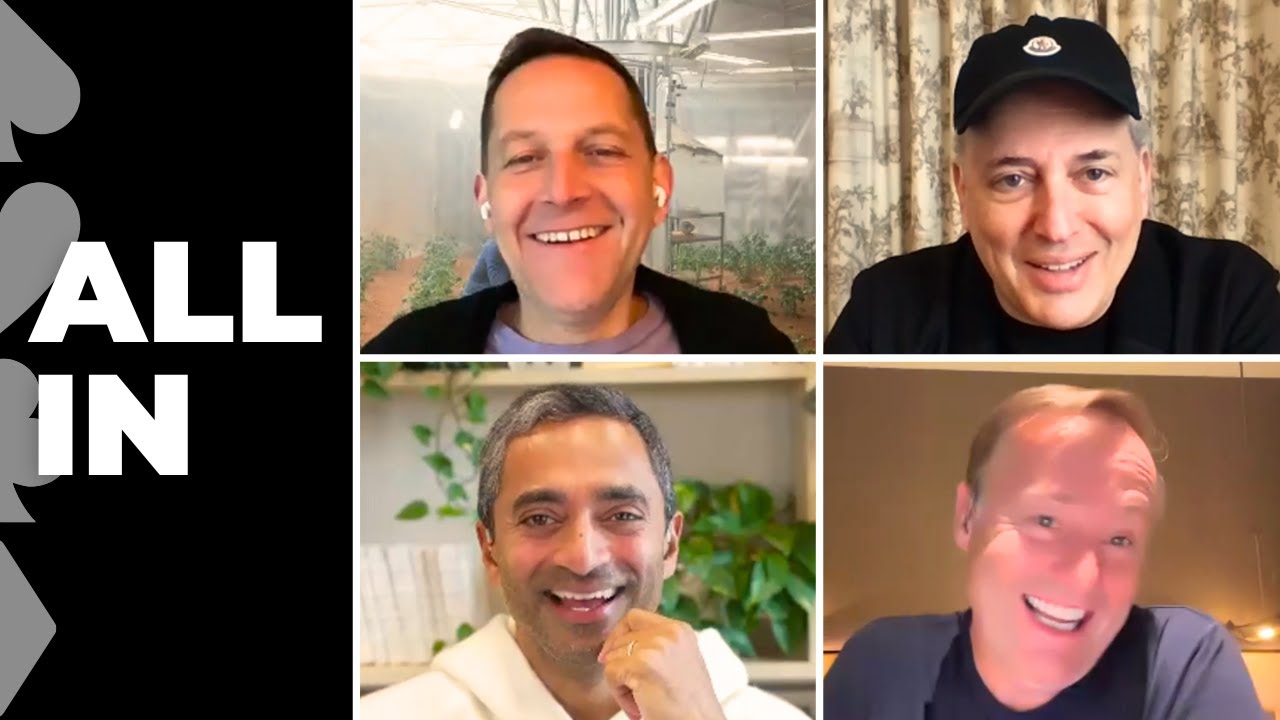
Sandeep "Sunny" Madra drops in to celebrate Definitive Intelligence joining Groq, while the besties range across OpenAI's strange corporate family tree, Apple's stalled product hunt, TikTok's recommendation power, Bitcoin ETFs, and microplastics. The hottest fights are about whether OpenAI diverted a charity's value and whether a foreign-controlled feed can move an election. Friedberg has the best episode by turning loaded labels into concrete tests; Sacks takes the TikTok round by supporting divestiture without pretending the evidence proves mind control.
Spice rack
Did OpenAI's for-profit structure betray its nonprofit mission?
Original point: OpenAI began as an open nonprofit, then moved its technology and economic upside into a closed, for-profit structure that benefited employees and investors.
What everyone argued
Chamath Palihapitiya
Chamath argues that OpenAI exposed a tax and governance loophole: it obtained nonprofit advantages, then used a complicated capped-profit structure whose ownership and IP transfers deserved scrutiny. He treats the structure itself as evidence that the organization was trying to avoid a constraint.
Jason Calacanis
Jason takes the most prosecutorial view: OpenAI closed technology that was supposed to benefit humanity, transferred IP and employees to a for-profit arm, and let insiders capture billions in equity. He contrasts that with nonprofit/for-profit structures such as Mozilla, where he says value flowed back to the foundation.
David Sacks
Sacks says Musk plausibly felt swindled because OpenAI changed from the open nonprofit he funded, and he warns that legal-structure innovation creates avoidable conflicts. He also acknowledges OpenAI's emails showing Musk knew far more capital and a for-profit vehicle might be needed.
David Friedberg
Friedberg argues that nonprofits can legitimately use for-profit subsidiaries and venture philanthropy to attract capital, citing the Cystic Fibrosis Foundation. He narrows the real tests to fair asset transfer, meaningful nonprofit ownership, and whether the nonprofit still performs charitable work.
Winner circle
Friedberg has the strongest answer. A nonprofit's use of a for-profit arm is not itself a loophole or betrayal; the real questions are fair transfer value, control, private benefit, and continuing charitable work. Jason and Chamath identified serious questions but repeatedly treated missing evidence as incriminating evidence. Sacks was appropriately cautious, yet Friedberg best matched both the burden of proof and the structure OpenAI eventually disclosed.
Commentary
Chamath Palihapitiya
Assumptions and fact checks
A complicated LP/GP and capped-profit structure is evidence that the organizers were trying to evade an obligation.
Why it mattersComplexity warrants diligence, but it does not establish tax avoidance, self-dealing, or illegality without transaction-level evidence.
Government tax authorities had enough incentive that the case would necessarily resolve the alleged loophole.
Why it mattersMusk's later case ended on limitations grounds, illustrating why economic stakes do not guarantee a merits ruling.
The OpenAI nonprofit's economic ownership was unknown and could only be guessed from a chart.
CheckAt recording time the detailed economics were not publicly disclosed. OpenAI's later recapitalization disclosed a 26% Foundation stake, but that does not retroactively validate Chamath's guessed 5%-20% range.
Jason Calacanis
Jason's sharpest contribution is identifying what records would matter. His weakest move is converting those unanswered questions into a verdict before the evidence arrives.
Assumptions and fact checks
Employee equity in the for-profit arm necessarily represented value taken from the nonprofit.
Why it mattersThat depends on when the IP was created, how assets were transferred, what consideration the nonprofit received, and the governing approvals.
Closing model weights proves OpenAI abandoned the goal of benefiting humanity.
Why it mattersOpen access is one route to public benefit, but safety, capital requirements, deployment, and nonprofit ownership are separate mechanisms.
OpenAI began as a nonprofit and later created a for-profit arm.
CheckOpenAI's own structure history confirms the nonprofit origin and subsequent capped-profit and public-benefit-company structures.
OpenAI's mission required all of its models to remain open source until AGI.
CheckOpenAI's Charter commits to ensuring AGI benefits humanity; it does not state that every model must remain open source until AGI is reached.
David Sacks
Sacks handles uncertainty better than the prosecution side of the table, but he never fully answers Friedberg's distinction between a permissible financing vehicle and an improper diversion of charitable assets.
Assumptions and fact checks
Changing the structure and access model after accepting Musk's money was probably inconsistent with the terms on which he contributed.
Why it mattersThe documentary history gives the grievance substance, but enforceability and the exact agreed terms remained contested.
Unusual legal structures almost always backfire.
Why it mattersNovel structures create governance costs, but OpenAI's ability to raise capital and preserve a large nonprofit stake shows they can also serve a real financing purpose.
Musk contributed roughly forty-something million dollars to early OpenAI.
CheckTrial reporting put Musk's early contribution at about $38 million, close to Sacks's qualified description.
Musk's lawsuit ultimately established that OpenAI violated its founding promise.
CheckThe 2026 case was dismissed after the jury found the claims untimely; it did not produce a merits finding that OpenAI violated a founding promise.
David Friedberg
Friedberg wins by replacing a label fight—nonprofit versus for-profit—with the concrete tests that would actually show abuse.
Assumptions and fact checks
Most valuable OpenAI IP was generated after the for-profit arm was created.
Why it mattersPlausible given the model timeline, but the value of preexisting research, people, brand, and donor-funded work requires transaction evidence.
Fair value and continuing charitable activity are more probative than the mere existence of a for-profit subsidiary.
Why it mattersThose questions track the actual risk of private benefit and mission abandonment.
The Cystic Fibrosis Foundation sold treatment royalty rights to Royalty Pharma for $3.3 billion.
CheckThe Foundation's own announcement confirms the $3.3 billion royalty sale to Royalty Pharma.
A nonprofit can finance or own interests in for-profit entities while pursuing its mission.
CheckThe Cystic Fibrosis venture-philanthropy example and OpenAI's disclosed Foundation/PBC structure both demonstrate the mechanism; legality still depends on governance and fair dealing.
Could TikTok's foreign-controlled algorithm meaningfully sway a U.S. election?
Original point: A foreign adversary with access to TikTok's data and recommendation system could subtly steer political content and sway an election, so ByteDance must divest.
What everyone argued
Chamath Palihapitiya
Chamath says organizations should be presumed infiltrated by multiple intelligence services, then grounds the policy case in reciprocity: China should not sell Americans a social platform that U.S. firms cannot sell in China.
Jason Calacanis
Jason argues that CCP access to a recommendation engine is too dangerous because small changes in amplification or suppression could shape voters without detection. He compares the risk to past media moments and social-platform suppression controversies.
David Sacks
Sacks supports divestiture for data security and reciprocity but demands evidence before asserting CCP-directed spying or election manipulation. He calls the brainwashing narrative threat inflation and distinguishes the right to protect data from the harder claim that ads or feeds secretly determine votes.
David Friedberg
Friedberg argues that TikTok's autoplay ranking gives the platform unusual power over what users see and points to political-content shifts as a plausible mechanism. He generalizes that repeated advertising changes buying and voting behavior.
Winner circle
Sacks wins the narrower question and the policy argument. Jason and Friedberg correctly identify a recommendation algorithm as a serious control surface, and hindsight vindicated divestiture. But they overstate what was known about persuasion and actual CCP use. Sacks reaches the same protective outcome while preserving due process and the distinction between documented data risk, manipulation capability, and proven election effect.
Commentary
Chamath Palihapitiya
Chamath's business-rule framing is stronger than his intelligence certainty; one is a policy principle, the other an unsupported universal claim.
Assumptions and fact checks
All major technology companies should be treated as certainly infiltrated by state actors.
Why it mattersA strong security posture is justified, but certainty requires evidence and should not conflate attempted espionage with operational control.
Reciprocal market access is sufficient reason to require divestiture.
Why it mattersReciprocity supplies a coherent trade rationale, though constitutional review still required a tailored national-security justification.
Jason Calacanis
Jason was right about the control mechanism and policy remedy, but he argued a worst-case scenario as if persuasion magnitude were already known.
Assumptions and fact checks
Subtle recommendation changes could sway a close election.
Why it mattersThe capability and risk are credible, but effect size and electoral causality are difficult to establish and vary by content and context.
Because influence is possible, the CCP should be assumed to exercise it through TikTok.
Why it mattersSecurity policy may act on risk, but factual accusation still requires evidence of direction or use.
The 2024 legislation required ByteDance divestiture or loss of U.S. distribution and hosting.
CheckThat is the core mechanism of the Protecting Americans from Foreign Adversary Controlled Applications Act.
The Supreme Court later found Congress's national-security concerns about TikTok's data practices and foreign relationship well supported.
CheckThe Court upheld the law and specifically found the government's data-collection justification sufficient.
David Sacks
Sacks wins because he does not force a choice between complacency and panic: divest on documented control and data risk, but do not claim a stolen election without evidence.
Assumptions and fact checks
Data collection and reciprocity justify divestiture even if the election-manipulation story is unproven.
Why it mattersThis matches the narrower rationale that survived Supreme Court review.
People accurately perceive how social media influences their own choices.
Why it mattersSelf-knowledge can be imperfect; the argument does not need this empirical claim to sustain its evidence standard.
The law could be justified by data-security concerns even without proof that TikTok had already swung an election.
CheckThe Supreme Court held that Congress's data-collection rationale alone sufficiently supported the challenged provisions.
David Friedberg
Friedberg is persuasive on attention control but too deterministic on vote conversion; the mechanism is real, the claimed effect size is not established.
Assumptions and fact checks
A surge in one side's videos after a geopolitical event indicates platform manipulation.
Why it mattersUser supply, engagement, demographics, and organic events are competing explanations unless ranking interventions are measured.
Autoplay ranking increases a platform's capacity to steer attention.
Why it mattersPreselection and ranking give the platform a meaningful control surface even when downstream persuasion remains uncertain.
TikTok's recommendation algorithm presented a national-security control concern distinct from ordinary speech regulation.
CheckThe Supreme Court record discussed ByteDance's algorithm control and the possibility of undetectable content alteration, alongside data concerns.
Does pursuing AGI mean building a dystopian superintelligence?
Original point: OpenAI's explicit devotion to AGI sounds cultish because ordinary people associate AGI with a sentient system that replaces humanity.
What everyone argued
Jason Calacanis
Jason defines AGI as intelligence beyond the smartest human and jokes that builders really mean a Terminator-like sentient god. He offers practical tests based on autonomous money-making or robotic furniture assembly.
David Sacks
Sacks says OpenAI's mission sounds wacky because common parlance treats AGI as the sentience that replaces humanity. He clarifies that AI development itself is valuable but suspects a meaningful group in tech actively wants to create superintelligence.
David Friedberg
Friedberg says AGI lacks a stable definition and can mean a cohort of highly capable knowledge tools rather than a hostile mind. He argues that greater capability can expand what individuals accomplish, while acknowledging a distinct superintelligence scenario in which software develops its own motivations.
Winner circle
Friedberg wins the definition fight. Sacks is right that some superintelligence rhetoric carries quasi-religious overtones, but he and Jason jump from broad capability to sentience and hostile agency without doing the connective work. Friedberg preserves the upside case while explicitly separating it from the genuine risk of a system with independent motivations.
Commentary
Jason Calacanis
Jason is right that AGI is an unstable label, but he uses that ambiguity to smuggle in the most cinematic definition rather than resolve it.
Assumptions and fact checks
The private goal behind AGI work is necessarily sentient superintelligence.
Why it mattersCapability, autonomy, sentience, and independent motivation are different properties; no evidence in the exchange collapses them.
OpenAI formally defines AGI as smarter than the smartest human who ever lived.
CheckOpenAI's Charter defines AGI as highly autonomous systems that outperform humans at most economically valuable work.
David Sacks
Sacks's concern deserves a hearing, but he needed to separate an AI subculture's philosophy from OpenAI's chartered definition and present capabilities.
Assumptions and fact checks
Common parlance should control how an organization's technical mission is judged.
Why it mattersPublic connotation matters for communication, but the organization's stated definition is more probative of the claim being debated.
A meaningful faction in technology values superintelligence even if it displaces human primacy.
Why it mattersThe view exists, but the exchange offers no basis for its prevalence or control over OpenAI.
OpenAI defines AGI as something that can replace 80% of jobs.
CheckThe Charter uses performance on most economically valuable work, not an 80%-of-jobs threshold.
David Friedberg
Friedberg argues well because he refuses to let one loaded label settle four different technical and philosophical questions.
Assumptions and fact checks
Highly capable AI could expand total human ambition rather than merely replace a fixed stock of work.
Why it mattersIt is a credible demand-expansion mechanism, though distribution, control, and transition costs remain unresolved.
Independent machine motivation is a separate risk category from high task capability.
Why it mattersSeparating agency, goals, autonomy, and competence prevents a category error central to this debate.
There is no single clear, universally accepted AGI definition.
CheckEven OpenAI publishes its own operational definition, and the panel demonstrates materially different definitions; the term lacks a universal technical threshold.
Had Apple peaked, or could its installed base unlock another growth cycle?
Original point: Apple had become a GDP-plus company with shrinking growth options, and Buffett's fading enthusiasm signaled a bad five-to-ten-year outlook.
What everyone argued
Chamath Palihapitiya
Chamath says mature iPhone demand, the failed car project, regulation, and a narrow product-option pool made Apple cyclical and GDP-bound. He reads fewer Buffett letter mentions and early selling as a warning, then argues Apple needs a large acquisition or cloud platform.
Jason Calacanis
Jason says iPhone upgrades had become hard to distinguish and Services had not yet solved the growth problem. He later argues that better on-device AI and Siri could create a meaningful refresh reason.
David Sacks
Sacks agrees that phones had become hard to distinguish, then proposes a practical counter: make Siri fast and useful with an LLM, possibly tied to new hardware, and users would have a reason to upgrade.
David Friedberg
Friedberg counters that rising GDP per capita in Android-heavy emerging markets could expand Apple's addressable customer base. He also values Apple's brand, distribution, and ability to launch products and services, while conceding that the option pool looked thinner after the car cancellation.
Winner circle
Friedberg wins, narrowly. Chamath correctly identified iPhone concentration, fewer obvious product options, and a real Berkshire warning signal. But he treated GDP exposure only as a ceiling, while Friedberg showed how rising incomes and Apple's premium ecosystem could also widen the customer base. Apple's 2025 and 2026 results fit Friedberg's less fatalistic model better.
Commentary
Chamath Palihapitiya
Chamath correctly diagnosed concentration risk but set too high a bar for growth and too low a bar for forecasting decay.
Assumptions and fact checks
Buffett mentioning Apple less often reliably predicts Berkshire's disengagement and Apple's operating future.
Why it mattersIt anticipated selling directionally, but letter word counts do not establish why Berkshire reallocates capital or predict Apple's operations.
Only a trillion-dollar new category or major acquisition could restore above-GDP growth.
Why it mattersServices, pricing, regional share gains, refresh cycles, and ecosystem monetization can compound without a car-scale category.
Apple's iPhone revenue had been roughly flat for several years around the time of the episode.
CheckApple's fiscal iPhone sales were $200.6 billion in 2023, $201.2 billion in 2024, then rose to $209.6 billion in 2025.
Apple faced a very bad next five to ten years unless it found a new growth engine.
CheckThe full horizon has not elapsed, but the available hindsight cuts against the confident forecast: fiscal 2025 revenue grew 6%, and Apple reported a record March 2026 quarter with double-digit growth in every geographic segment.
Jason Calacanis
Jason's best move is shifting from upgrade fatigue to a testable product mechanism; his weakest is generalizing from his own phone drawer.
Assumptions and fact checks
A strong on-device AI upgrade could restart the iPhone replacement cycle.
Why it mattersThe mechanism is plausible and later demand improved, but public results do not isolate AI as the cause.
Services revenue was growing while iPhone revenue had stagnated.
CheckApple reported Services growth of 13% in 2024 and 14% in 2025, while iPhone was flat in 2024 before growing 4% in 2025.
David Sacks
Sacks strengthens the discussion by naming one product experience that could change replacement behavior instead of treating decline as destiny.
Assumptions and fact checks
A genuinely useful AI assistant is large enough to motivate a hardware refresh.
Why it mattersPlausible, but dependent on product quality, hardware requirements, privacy, and whether competitors commoditize the feature.
David Friedberg
Friedberg wins by treating global GDP exposure as a two-sided mechanism and by acknowledging, rather than hand-waving, Apple's product risk.
Assumptions and fact checks
Rising emerging-market incomes will translate into premium iPhone share gains.
Why it mattersIncome supports affordability, but Android ecosystems, local pricing, regulation, and switching costs can block conversion.
Brand and distribution preserve valuable product options even after a major internal project fails.
Why it mattersApple's later sales breadth supports the value of the installed base and distribution, though not every new category will succeed.
Chamath identified the right audit questions—ownership, IP transfer value, and nonprofit benefit—but treated an unresolved diligence checklist as if it already pointed to misconduct.