Featuring
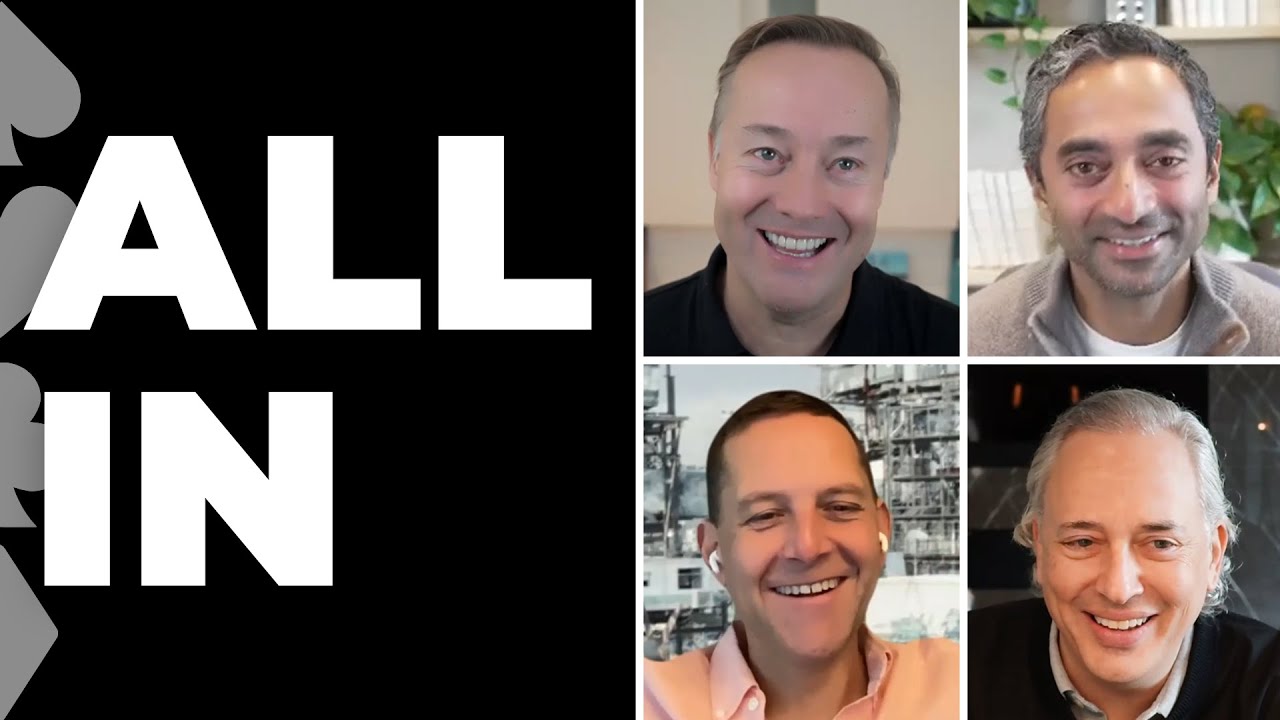
Episode 157 aged into a three-course receipt dinner: Google Play gatekeeping, AI training licenses, and the limits of a second chance for Alex Jones. The Jones exchange is easily the spiciest—twenty-plus minutes of the besties trying to separate free-speech law, private-platform judgment, and real harm to Sandy Hook families. Jason has the best episode because hindsight vindicates his core read in all three debates, although Friedberg supplies the cleanest distinction between government censorship and a platform's own editorial choices.
Spice rack
Should X have reinstated Alex Jones, or did the Sandy Hook harm justify an indefinite platform ban?
Original point: Jones's speech was odious, but an apology and second chance were preferable to a lifetime ban because permanent censorship standards spread and are easily abused.
What everyone argued
Chamath Palihapitiya
Chamath called himself a free-speech absolutist, said lifetime bans put too much corruptible judgment in the hands of platform leaders, and preferred escalating timeouts and financial penalties even for speech he found disgusting.
Jason Calacanis
Jason argued that a platform owner need not wait years for a court when repeated falsehoods are producing visible harassment. He would prioritize the victims, require evidence of changed behavior before reinstatement, and remove Jones again if the conduct recurred.
David Sacks
Sacks argued that Jones had apologized, suffered bankruptcy and judgments, and should not face a lifetime ban. He favored applying First Amendment categories as a platform policy, with temporary suspensions for incitement or harassment and a second chance after contrition.
David Friedberg
Friedberg personally preferred more speech, even misinformation, but insisted Twitter was a private enterprise entitled to choose and editorialize its product. He separated platform choice from government intervention and warned that vague 'dangerous speech' rules can suppress claims that later prove true.
Winner circle
Jason wins, with Friedberg earning credit for the crucial legal distinction. A private platform may choose broad speech rules, but Jones's apology did not by itself show changed behavior, the victim harm was concrete, and the later payment history undercuts the claim that he had already paid his price. For this record, continued exclusion or an indefinite ban with a demanding review process was more defensible than automatic reinstatement after a timeout.
Commentary
Chamath Palihapitiya
Assumptions and fact checks
Escalating timeouts and fines are less corruptible than permanent bans.
Why it mattersGraduated sanctions can improve proportionality, but someone still must define violations, adjudicate intent and harm, and decide when repeated conduct warrants permanent exclusion.
Jason Calacanis
Jason sometimes speculated carelessly about Jones's mental health and motives, which was unnecessary. His stronger argument needed neither: the repeated false claims, identified victims, and documented harassment were enough.
Assumptions and fact checks
A platform should intervene before final court adjudication when repeated speech is linked to specific, ongoing victim harm.
Why it mattersPrivate moderation need not use the criminal incitement threshold. A documented pattern, appeals, and proportional review can justify interim or indefinite exclusion while preserving due process inside the platform.
The Sandy Hook families won nearly $1.5 billion in judgments after describing harassment and terror from Jones's supporters.
CheckCourt proceedings produced judgments approaching $1.5 billion, and family members testified about threats and harassment connected to the hoax campaign.
David Sacks
Sacks was right to demand a causal standard and warn against guilt by association. He weakened that disciplined point by sliding into unrelated censorship examples and by treating bankruptcy as completed accountability.
Assumptions and fact checks
An apology and temporary punishment adequately reduce the risk of renewed harm after reinstatement.
Why it mattersSacks offered no behavioral evidence beyond the apology, while Jason noted Jones did not clearly explain what operating practices had changed. The severity and duration of the original campaign warranted a higher burden before reinstatement.
A platform should generally copy First Amendment limits when writing its moderation rules.
Why it mattersThat supplies a predictable speech-protective baseline, but platforms also curate an expressive product and manage harms that fall well short of criminally punishable speech.
Jones had paid a huge price through bankruptcy and fines by the time of reinstatement.
CheckHe entered bankruptcy, but the families still had not received payment years later, and the trustee later alleged transfers intended to shield more than $5 million in assets. Bankruptcy pressure is not the same as satisfying the judgments.
Legal incitement requires more than showing that listeners later committed harmful acts.
CheckSupreme Court doctrine requires advocacy intended and likely to produce imminent lawless action; that is a much narrower test than ordinary causation or platform risk.
David Friedberg
Friedberg supplied the distinction the rest of the panel kept blurring: protecting a platform from government control does not require the platform to carry every speaker.
Assumptions and fact checks
More misinformation is preferable to empowering a small group to police truth.
Why it mattersThe tradeoff depends on specificity and harm. Broad political claims favor counterspeech; repeated false factual claims about identifiable grieving families create a much stronger case for intervention.
A private social-media platform has its own editorial interest in deciding what content to carry or exclude.
CheckMoody v. NetChoice explains that feed curation combines many voices into the platform's own expressive product and that content choices are editorial judgment protected by the First Amendment.
Did Android's nominal openness make Google Play's fees and restrictions reasonable, or did the app-store gatekeeper need court-ordered competition?
Original point: Android permits sideloading, Google Play provides real distribution and payment value, and the private jury verdict was unlikely to survive appeal or materially alter the market.
What everyone argued
Chamath Palihapitiya
Chamath treated the verdict mainly as a product of forum and trial format, suggesting a Dallas jury might have ruled differently and asking what the win would actually change.
Jason Calacanis
Jason argued that developers face a tightening gatekeeper tax, supported Epic's challenge, and called for verified third-party stores and freedom to use outside billing without scare screens or other friction.
David Sacks
Sacks called Apple and Google a mobile duopoly, described app stores as gatekeepers that extract more value over time, and argued that Epic was helping the ecosystem by attacking anti-steering rules and a fee structure that breaks lower-margin businesses.
David Friedberg
Friedberg emphasized Android's open-source roots, sideloading, Google Play's retail and payment value, and reduced subscription fees. He predicted Google had a strong appeal and that the verdict would not cause a major shift in app-store behavior.
Winner circle
Jason and Sacks win. They identified the actual competitive mechanism—gatekeeper rules that prevented outside stores and payments from disciplining Google's fees—while Friedberg leaned too heavily on technical sideloading and agency inaction. The unanimous appellate affirmance and the July 2026 rollout of third-party stores make the hindsight result unusually clear.
Commentary
Chamath Palihapitiya
Chamath was appropriately cautious about what a trial verdict alone established, but his Dallas thought experiment displaced the stronger question: whether Google's contracts and friction actually suppressed rival stores.
Assumptions and fact checks
The San Francisco jury and trial format, more than Google's conduct, explain Epic's win.
Why it mattersVenue can matter, but a unanimous appellate panel later found the record replete with evidence of anticompetitive conduct. That substantially weakens the claim that the result was mostly jury shopping.
Jason Calacanis
Jason had the best forward-looking policy instinct: treat security as a design constraint, not a magic word that settles whether distribution must remain closed.
Assumptions and fact checks
Verified third-party stores and outside billing can add competition without abandoning platform security.
Why it mattersThe injunction permits reasonable safety measures while requiring rival-store access, and Google's July 2026 implementation includes security review rules rather than an unfiltered free-for-all.
Epic won a unanimous jury verdict after presenting evidence of sweetheart deals, deleted Google chats, and measures that discouraged rival app stores.
CheckThe Ninth Circuit's opinion recounts the unanimous verdict, Google's developer and device-maker agreements, and the district court's adverse-inference instruction over deleted chats.
David Sacks
Sacks argued from incentives and business-model effects rather than treating every fee as inherently illegitimate. That made his intervention case more disciplined than a simple '30% is too high' complaint.
Assumptions and fact checks
Restricting specific gatekeeper tactics is better than breaking up the platforms.
Why it mattersThe remedy now taking effect uses behavioral and access rules rather than structural separation, directly testing Sacks's less disruptive approach.
Google Play's challenged conduct entrenched monopoly control over Android app distribution and in-app billing.
CheckThat was the jury's finding, and the Ninth Circuit affirmed both liability and the district court's competition-restoring injunction.
David Friedberg
Friedberg offered the strongest losing-side steelman, but his analysis narrowed the case to whether sideloading was physically possible. The courts focused on whether Google used contracts and friction to prevent that option from becoming a competitive constraint.
Assumptions and fact checks
If serious antitrust violations existed, a federal agency probably would have brought the case.
Why it mattersPrivate antitrust enforcement is part of the statutory system. Agency silence does not negate evidence, and both the jury and appellate court ultimately accepted Epic's monopoly-maintenance case.
A flat or reduced store commission is reasonable because Google supplies discovery, payment convenience, and security.
Why it mattersThose services have value, but that does not justify tying them to exclusionary distribution and steering rules. Price reasonableness and competitive process are separate questions.
Android technically allowed users to install apps outside Google Play.
CheckThe appellate record recognized sideloading while also documenting the contractual and user-experience barriers that kept rival distribution weak.
Did OpenAI's Axel Springer deal validate licensing for model training, or was it merely a paywalled-news retrieval agreement?
Original point: The licensing deal showed that publishers retain rights in their work and that AI companies should obtain permission before using it to build commercial derivative products.
What everyone argued
Jason Calacanis
Jason said the Axel Springer partnership supported his earlier claim that rights holders should control commercial use of their work, cited the fair-use market-effect factor, and argued that scraping from the open web does not erase copyright.
David Sacks
Sacks argued that copying expressive output is different from training on available material to create new content, and that transformative training should generally fit fair use unless the model returns plagiarism.
David Friedberg
Friedberg said Jason had framed the deal incorrectly: it unlocked paywalled material for live retrieval and presentation, not a training dataset, so it did not validate a licensing requirement for open-web model training.
Winner circle
Jason wins the debate as it was actually teed up. The primary-source announcement says the partnership included training, so Friedberg's central rebuttal was factually wrong. Jason does not get the broader victory he claimed, however: whether permission is legally required remains a use-by-use fair-use question, and later cases support parts of Sacks's position.
Commentary
Jason Calacanis
Jason won the factual receipt but oversold its legal reach. A license proves that access had value and that both sides preferred a deal; it does not itself decide what copyright law would have allowed without one.
Assumptions and fact checks
Commercial model training on copyrighted open-web material requires permission as a general rule.
Why it mattersLater cases cut both ways. Bartz treated training on lawfully acquired books as transformative fair use, while Ross rejected fair use for copying headnotes to build a competing legal-research product.
The Axel Springer deal provided summaries with attribution and links and also covered use connected to OpenAI's models.
CheckOpenAI's announcement says users would receive summaries, including paid content, with links and attribution, and separately says the collaboration includes using Axel Springer content to advance model training.
David Sacks
Sacks had the best general legal intuition on transformation, but he treated output similarity as nearly the whole test and did not engage Jason's market-effect point.
Assumptions and fact checks
Training that produces new, non-plagiarized content should generally qualify as fair use.
Why it mattersTransformative purpose is powerful but not dispositive. Courts also examine how copies were obtained, whether protected expression was used, and whether the use substitutes for an existing or likely market.
David Friedberg
Friedberg's framework was sharper than his fact-checking. He separated two product functions well, then mistakenly forced the actual agreement into only one of them.
Assumptions and fact checks
Open-web availability is enough to make model training fair use.
Why it mattersAvailability is not a license and does not resolve the four-factor test. Later rulings turned on transformation, acquisition, competitive purpose, and market harm, not merely whether material could be downloaded.
The Axel Springer agreement was not unlocking content for training; it was only a retrieval integration.
CheckOpenAI's announcement expressly states that Axel Springer content would be used to advance training in addition to powering attributed summaries of current and paid content.
Chamath offered a real alternative rather than a slogan, but he understated how much discretionary judgment his own system would still require.