Featuring
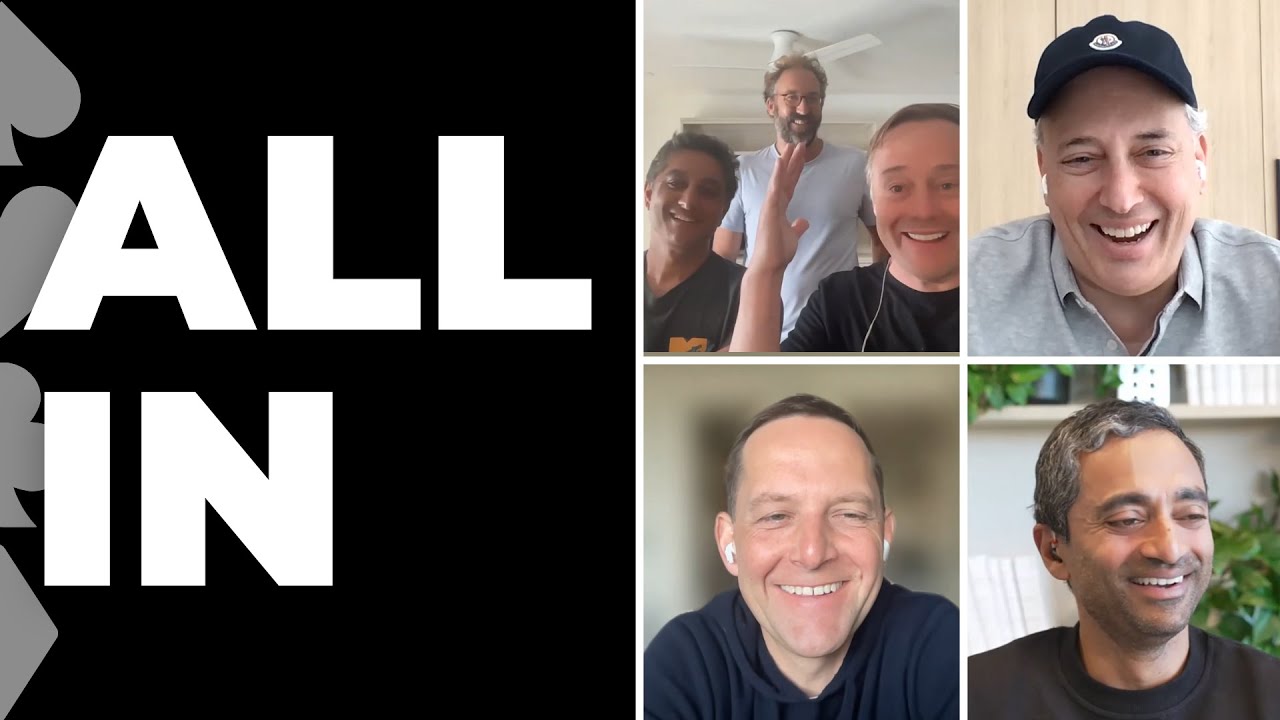
Antonio Gracias and Gavin Baker join from Starbase for a euphoric account of Starship's first integrated flight, before the besties turn to Fox's Dominion bill, AI's investment dust storm, and the late-stage startup reckoning. This is more seminar than cage match: the sharpest disagreement comes at the end, where Sacks backs a DeSantis comeback and Chamath calls a Haley nomination. Hindsight bonks both predictions, while Jason has the best debate result for spotting that the Disney-DeSantis feud was costing both sides more than either wanted to admit.
Spice rack
Could DeSantis or Haley still beat Trump for the 2024 Republican nomination?
Original point: Trump's post-indictment polling bounce was temporary, leaving DeSantis a plausible upset path similar to Obama's 2008 comeback against Hillary Clinton.
What everyone argued
Chamath Palihapitiya
He rejected the DeSantis thesis and made the sharper contrarian prediction: Nikki Haley would win because DeSantis became less impressive with exposure.
David Sacks
He argued DeSantis was the only credible alternative to Trump, that Trump's indictment bounce could normalize, and that the early calendar left time for an Obama-style upset.
Winner circle
No winner. Sacks offered the stronger process argument, while Chamath correctly sensed DeSantis's candidate problem, but both selected a nominee whom Trump defeated. Hindsight settles the central question cleanly.
Commentary
Chamath Palihapitiya
Assumptions and fact checks
Private impressions of DeSantis's charisma would be decisive enough to lift Haley above both DeSantis and Trump.
Why it mattersThe premise skipped the much larger constraints of Trump's base, Haley's low starting support, fundraising, and delegate mechanics.
Nikki Haley would win the Republican nomination.
CheckDonald Trump won the Republican nomination and the 2024 general election; Haley did not win the nomination.
David Sacks
Sacks built the more plausible April 2023 case, with a mechanism and a timeline, but analogy did too much work. He needed evidence that DeSantis could actually convert favorable expectations into voters and delegates.
Assumptions and fact checks
DeSantis could reproduce Obama's insurgent path against an established favorite.
Why it mattersThe analogy understated Trump's incumbent-like bond with the GOP base and overestimated DeSantis's campaign organization and retail appeal.
DeSantis was the only Republican candidate polling above roughly five percent besides Trump at that moment.
CheckContemporary polling broadly showed Trump and DeSantis far ahead of a fragmented low-single-digit field, though exact averages varied by date and pollster.
Did fighting Disney help DeSantis, or damage both sides?
Original point: The parental-rights fight worked for DeSantis in the primary and could work in a general election; Disney gained little by escalating it.
What everyone argued
Jason Calacanis
He agreed parents deserve transparency but called the prolonged fight a bad look for both Disney and DeSantis.
David Sacks
He said the law concerned parental notice and limits on sexual-orientation or gender-identity instruction, that Disney entered the fight, and that the clash benefited DeSantis while damaging Disney's family-brand trust.
Winner circle
Jason wins narrowly. Sacks had a defensible account of the statute and DeSantis's leverage, but he claimed a broader political and brand victory than the evidence could carry. The negotiated truce and DeSantis's failed presidential bid fit Jason's mutually costly framing better.
Commentary
Jason Calacanis
Jason had the right strategic instinct, but his case would have been stronger with polling, tourism, brand, or campaign evidence instead of the elastic phrase 'bad look.'
Assumptions and fact checks
Escalating a dispute with a major employer and cultural brand imposed reputational costs on both sides.
Why it mattersThe two-year legal conflict ended in negotiated settlements rather than a clean public-policy victory, supporting the view that both sides had reason to stop.
David Sacks
Sacks was strongest on the law's actual wording and weakest when turning that into a sweeping political win. The later settlement and failed campaign make the victory claim look much too tidy.
Assumptions and fact checks
A culture-war issue useful in a Republican primary would scale into the general election.
Why it mattersPrimary salience does not establish general-election breadth, and DeSantis did not reach the general election to validate the prediction.
The law did not mention gay or homosexuality.
CheckThe enacted text uses 'sexual orientation or gender identity'; it does not use the words gay or homosexuality.
The law was basically a parental-right-to-know measure.
CheckIt included parent-notification rules, but also independently prohibited certain classroom instruction about sexual orientation or gender identity and created enforcement remedies. 'Basically' omits material provisions.
Chamath spotted DeSantis's weakness but leapt from a useful observation to an unsupported winner. Calling the fade was better than naming Haley as the beneficiary.